
Last updated November 23, 2026
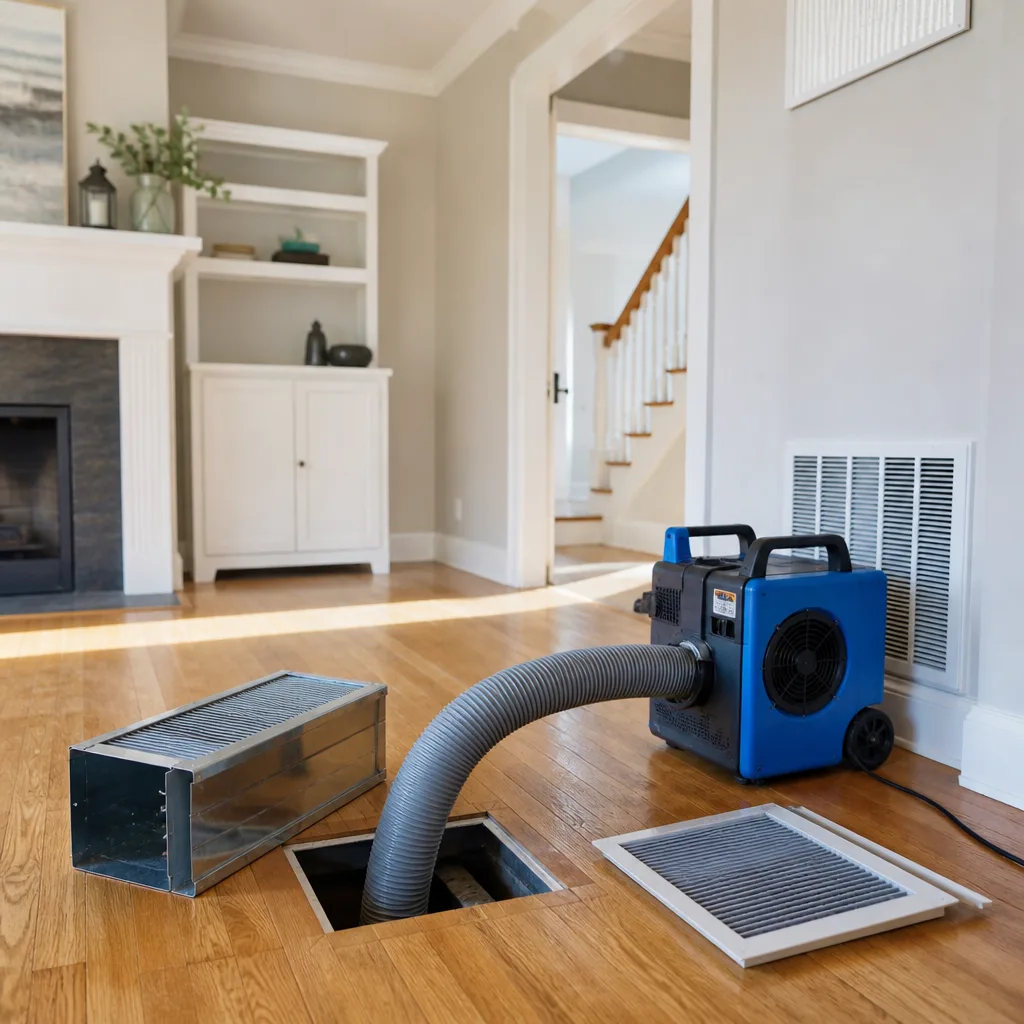 Whole-home duct cleaning
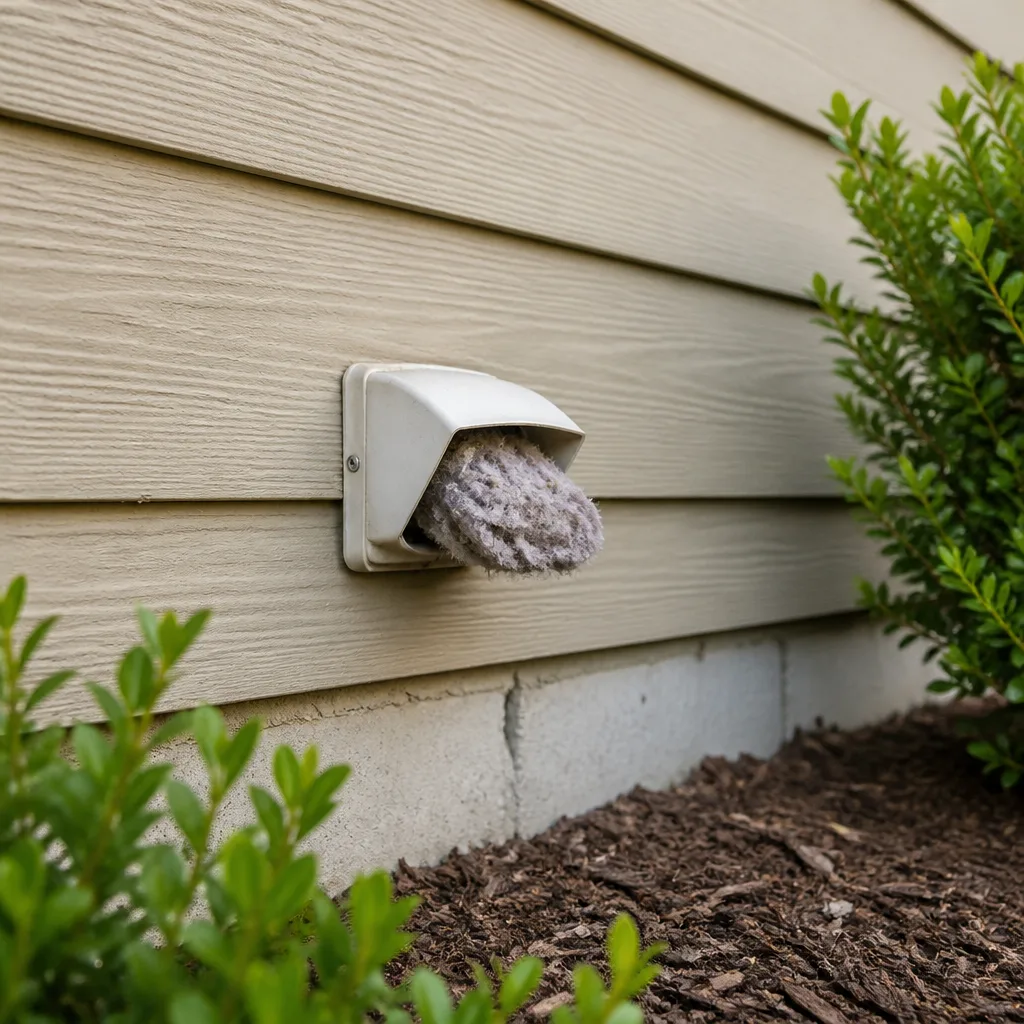 Dryer vent cleaning
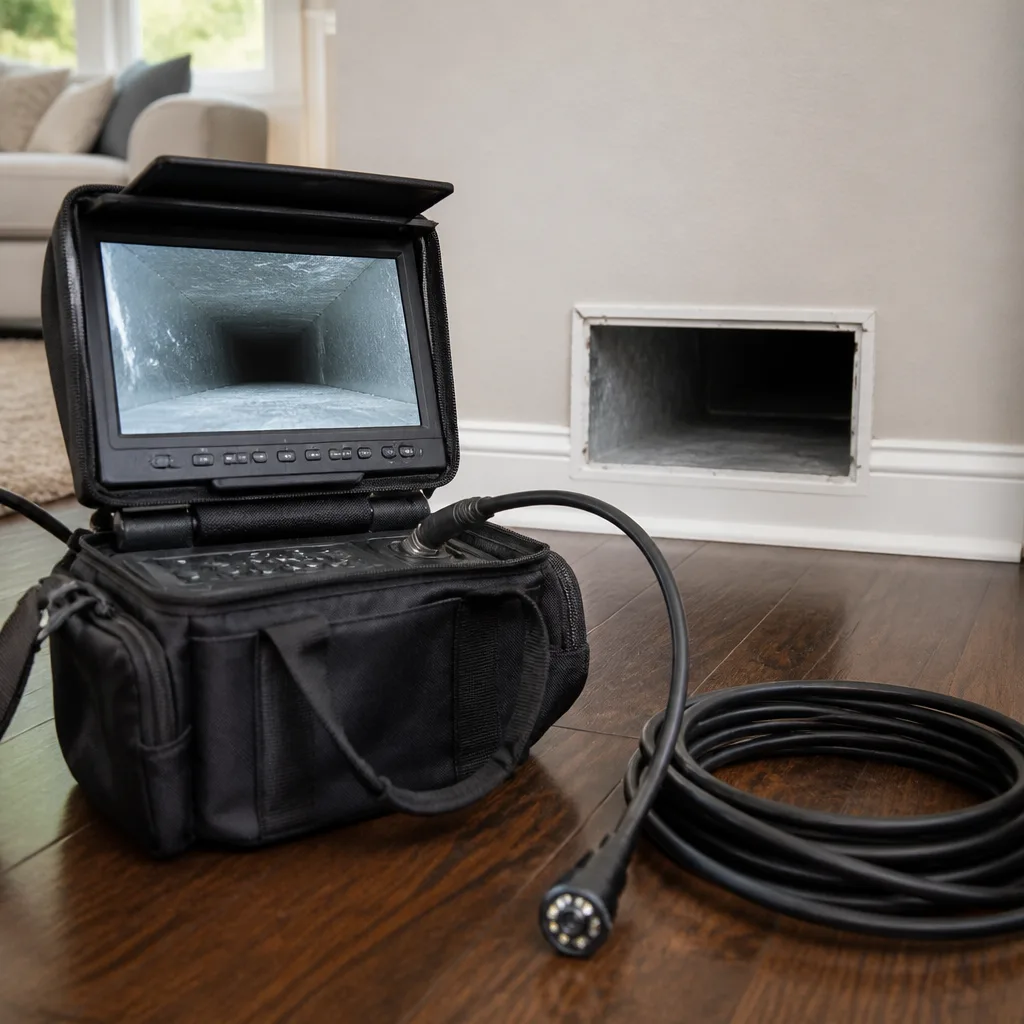 Camera inspection
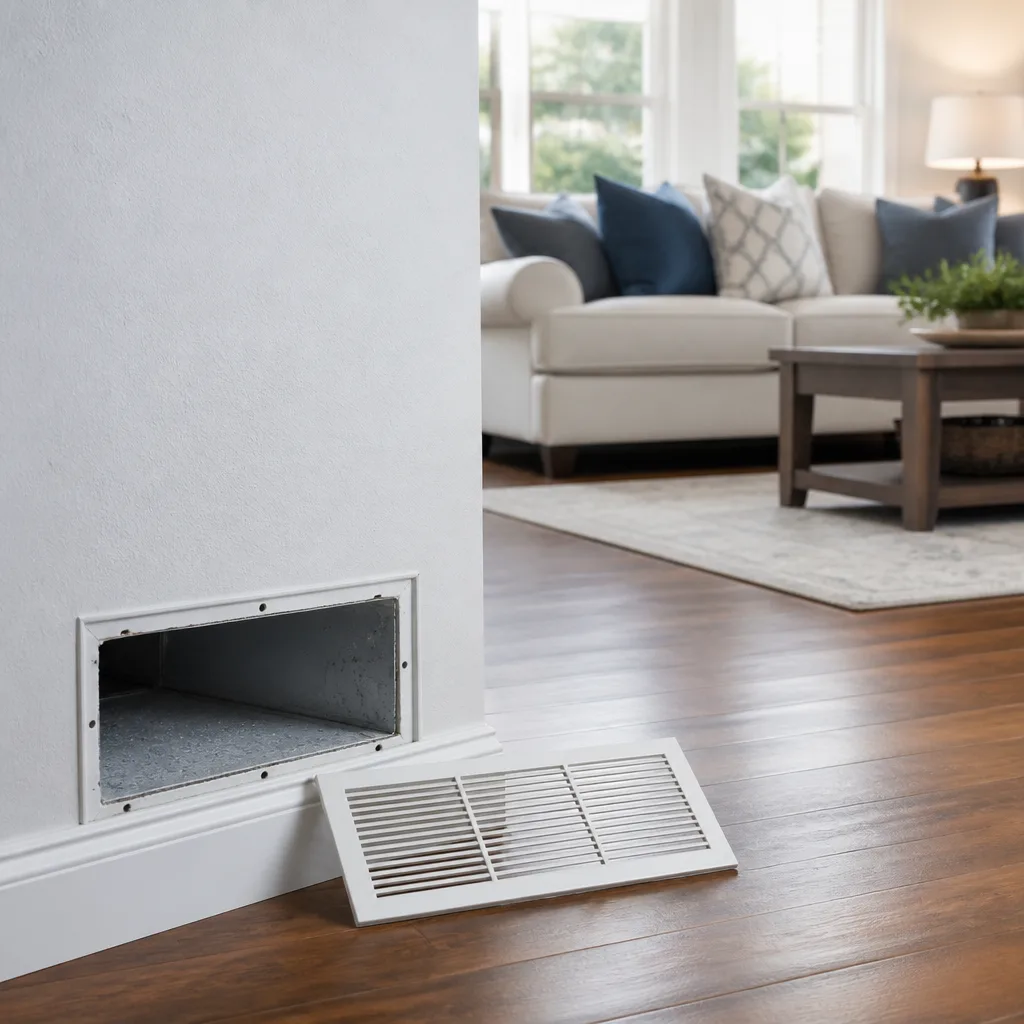 Sanitizing & deodorizing
Whole-system duct and dryer vent check with before-and-after photos - you see exactly what came out of your vents
That "$99 whole-house special" is a bait ad - the real number appears once they are in your hallway, or the "clean" is a shop-vac at the register. We photograph the inside of your ducts before and after instead.
DIY vs Professional Air Duct Cleaning: The Hayes Barton Homeowner’s Decision Guide
Most homeowners picture duct contamination as a thin gray film coating the inside of the vent they can see. That’s a reasonable guess. It’s also wrong. The tools sold at big-box stores can clean what you can see: the first 12 to 18 inches of duct near your registers. The contamination that actually degrades air quality and strains your HVAC system sits 4 to 8 feet in, past the reach of any consumer vacuum or brush kit. This guide covers exactly what DIY duct work can accomplish in a Hayes Barton home, where that method hits its ceiling, and how to decide whether to spend $200 on equipment or put that money toward a $650 whole-home result. You’ll get specific tools, specific limits, and a clear decision framework.
Quick Answer
DIY air duct cleaning can meaningfully improve register and grille hygiene, but it cannot reach the deep duct contamination that matters most. Consumer tools top out at the register and the first foot or two of accessible duct. Professional cleaning with rotary brushing and negative-air extraction removes built-up debris from main trunks, plenums, coil faces, and blower wheels. If you have visible mold, rodent evidence, smoke residue, or post-renovation debris in your ducts, professional cleaning is non-negotiable. For routine maintenance in a Hayes Barton home, a hybrid approach usually works best: simple register and grille care yourself between full professional cleanings.
Styles & brands we work with
- Whole-home duct cleaning
- Dryer vent cleaning
- Camera inspection
- Sanitizing & deodorizing
Table of Contents
- What DIY Duct Cleaning Can Actually Accomplish
- The Tools That Work and the Ones That Don’t
- Where DIY Hits Its Ceiling
- The Risk Calculus for Hayes Barton Attic and Crawlspace Duct Layouts
- Situations Where Professional Cleaning Is Non-Negotiable
- The Hybrid Approach: DIY Between Professional Cleanings
- How to Think About the Cost Trade-off Over a Decade
- Why Your Ducts Aren’t a Standalone System
What DIY Duct Cleaning Can Actually Accomplish
DIY duct work is genuinely useful when you’re honest about its scope. The register and the boot – the transition fitting behind the register – are where dust collects fastest and where you can reach safely. That short stretch takes real abuse. It’s where air accelerates into your room, where pet hair and lint catch on grille louvers, and where visible dust collects first.
Here’s what a careful DIY approach can handle well in a Hayes Barton home:
- Register and grille washing. Remove each supply and return grille, wash it in a utility sink or tub with warm soapy water, dry it completely, and reinstall. This alone makes a visible difference on allergy-heavy weeks.
- Accessible boot vacuuming. A vacuum with a crevice tool can reach into the boot and lift loose dust, hair, and lint from the first reachable section.
- Surface dusting of the register collar. The frame around the opening collects dust and is easy to wipe.
- Return air grille care. The large return grille in a hallway or central wall is a lint magnet and responds well to regular cleaning.
- Filter replacement. Arguably the highest-impact DIY action. A clean filter does more for your air than any register brush, and it’s the one task every homeowner should own.
What these tasks have in common: they operate on surfaces you can see and reach. That’s the honest boundary of DIY. Everything past the register collar, past the first 12 to 18 inches, is another category of work.
If you’ve been reading about Air Duct Cleaning Hayes Barton and wondering whether to try it yourself first, our answer is: yes, do the register and filter work yourself. Then decide if the rest of the system needs more.
The Tools That Work and the Ones That Don’t
Most DIY duct kits sold at retail are aimed at a problem they can’t reach. Before you spend money, know which tools do useful work and which give you the feeling of cleaning without the result.
What works:
- A high-suction wet/dry shop vacuum. A 6 to 12 gallon wet/dry vac with a crevice tool and a round brush head is the single most useful DIY duct tool you can buy. It fits the register opening, reaches the boot, and lifts loose debris.
- A flexible crevice tool or a 2-foot flexible extension. These let you reach further into a straight run of accessible duct without forcing anything around a bend.
- A washable or high-MERV filter matched to your furnace. This is air quality work, not duct cleaning, and it’s the highest-return item on the list.
- Grille removal tools. A screwdriver and a step stool, honestly. Remove the grille to clean the boot properly rather than vacuuming through the louvers.
What doesn’t work as advertised:
- Consumer rotary brush kits. The cheap versions whip around inside flexible duct and can damage the inner liner. More on that below.
- Compressed-air “duct blasts.” These blow debris loose without containing it. Some of it lands back in your rooms.
- Chemical foggers bought online. Fogging without source removal seals debris in place and does not clean anything.
The essential point: professional duct work uses mechanical agitation plus simultaneous extraction with negative pressure. A consumer vacuum has no way to maintain negative pressure across a duct run, so dislodged debris tends to go where gravity and airflow take it – which is often back into the living space.
Where DIY Hits Its Ceiling
Four components inside a home’s duct system decide the actual air quality result, and none of them are reachable with consumer tools. This is where the DIY versus professional question usually answers itself.
- Main trunk contamination. The large rectangular or round trunk lines carry the majority of air volume. Years of settled dust and debris build up in the trunk floor and at every takeoff fitting. A shop vac at the register can’t touch them.
- Coil face cleaning. The evaporator coil is a dense finned surface that collects dust and becomes a moist environment for biological growth. Cleaning it requires access to the coil compartment, a coil-safe cleaner, and contained wash-down. This is a refrigeration-adjacent task, not a DIY one.
- Blower wheel decontamination. The blower wheel is a squirrel-cage fan that packs with dust over time and throws dirty air back through the system. Cleaning it requires removing or accessing the blower assembly – which is beyond the scope of what a homeowner should be taking apart.
- Source-removal cleaning from deep duct sections. Proper source removal means agitating debris deep in a run while simultaneously pulling it out under negative pressure. That’s what the air duct cleaning process is built around, and it’s why professional equipment includes rotary brushes and negative-air machines working together.
In our experience, homeowners who’ve tried DIY first usually arrive at a professional call because they clean the registers and nothing changes. The visible layer was never the problem. The four items above are the problem, and each one requires access, equipment, and containment that a homeowner can’t reasonably assemble.
The Risk Calculus for Hayes Barton Attic and Crawlspace Duct Layouts
Hayes Barton and the surrounding older neighborhoods have specific housing stock that raises the risk of DIY duct work: flexible duct runs routed through crawlspaces and attic spaces, often retrofit-installed, frequently supported at wider-than-ideal intervals. Flex duct is not fragile in a dramatic sense, but it is easy to damage if you don’t know what you’re pushing against.
Three specific failure modes show up with consumer rotary brushes and aggressive vacuum extensions:
- Dislodged duct liner. Flexible duct has an inner liner (often a thin plastic membrane) that can tear or separate from the insulation blanket when a rotary brush snags. Once the liner is compromised, the duct loses its vapor barrier and becomes a debris trap.
- Disconnected boot connections. The boot-to-duct connection is often secured with a zip tie or mastic. Pushing a brush head past the register can pop it loose. Once disconnected, conditioned air dumps into the crawlspace instead of your rooms, and you’ll notice a pressure problem before you notice the gap.
- Liner contamination with insulation fibers. A torn liner exposes the insulation blanket to airflow. Fiberglass particles in the supply air are a health problem, not a nuisance.
The risk isn’t high in absolute terms, but the DIY cost of a mistake runs well past the price of professional cleaning. In Hayes Barton’s older homes – many of them with attic-routed supply trunks and crawlspace-routed returns – you can’t see the run you’re working on. That’s the core issue. If you can’t see what you’re pushing against, don’t push hard.
Our technicians work with flexible duct every week and know how it behaves. Our technicians have up to 10 years of experience with the equipment and the layouts that turn up in Hayes Barton crawlspaces and attics.
Situations Where Professional Cleaning Is Non-Negotiable
Some duct conditions are not budget questions. They’re health, safety, and building integrity questions. If any of the following apply to your Hayes Barton home, the DIY door is closed.
- Visible mold inside the ductwork or at the coil. Mold requires source removal plus antimicrobial treatment. A homeowner can’t safely clean a colonized duct with consumer products, and fogging without removal spreads spores without clearing them.
- Rodent evidence – droppings, nesting material, or odor. Rodent contamination in ducts requires contained, source-removal cleaning with negative pressure to prevent aerosolizing pathogens into the living space. Don’t vacuum this yourself.
- Post-fire smoke residue. Smoke residue coats duct surfaces with acidic soot that corrodes metal components and keeps off-gassing. Cleaning it properly requires containment and specialty products.
- Post-renovation debris. Drywall dust, sawdust, and construction grit work their way deep into duct runs during a renovation. A shop vac at the register won’t clear it, and your new filter will clog repeatedly until the source is removed.
- A recent HVAC replacement. When a system is swapped out, the existing ducts should be cleaned before the new equipment starts pulling air through them. Debris from the old system will shorten the life of the new one.
Air Duct Cleaning Hayes Barton works these cases with professional-grade equipment: Rotobrush rotary brush systems for mechanical agitation and simultaneous extraction, Nikro negative-air machines for contained source removal, and Abatement Technologies filtration devices to capture dislodged particulates during service. That’s the difference between a cleaning that removes contamination and one that just moves it around.
The remaining piece of the loop is sealing and repair. Ducts that leak at fittings and boot connections undo half the cleaning work by pulling contaminated air from crawlspaces and attic spaces back into the system. That’s why we handle cleaning, sanitizing with EPA-registered products, duct repair, and duct sealing as one scope – no need for a separate contractor to follow up.
The Hybrid Approach: DIY Between Professional Cleanings
The realistic best-practice in Hayes Barton homes is a hybrid: professional cleaning on a sensible interval, and simple self-maintenance in between. This keeps the system clean longer and stretches the time between full service calls.
Here’s a routine that works:
- Monthly: check the filter. Hold it up to light. If you can’t see through it, replace it. High-MERV filters need more frequent swaps than the fiberglass ones.
- Seasonal: wash the supply and return grilles. Remove, wash, dry, reinstall. Do this when you change over between heating and cooling seasons.
- Quarterly: vacuum the register boots. Shop vac with a crevice tool, straight into the boot, no extensions past the transition fitting.
- As needed: wipe register collars and surrounding wall or ceiling surface. This is dust that’s settled, not duct contamination – but it’s visible and easy to manage.
- Annually: look at the return grille. If it’s noticeably linting up within weeks of cleaning, it’s time to book a professional service and find out what’s coming forward.
If your home has a Honeywell or Aprilaire whole-home filtration unit or humidifier, those systems need their media changed on their own schedule. Those are different service intervals from duct cleaning, and getting them right keeps the whole air quality system working as intended. If you have one of these tied to your HVAC, ask about checking it during a service visit. If you also haven’t had the dryer vent attended to, that’s a separate safety item worth booking at the same time – see dryer vent cleaning for the fire-safety case.
How to Think About the Cost Trade-off Over a Decade
Here’s where the DIY versus professional argument usually gets decided, and not by the per-call price. Set the two paths side by side over ten years:
- DIY-only path. A shop vac, crevice tools, brushes, filter replacements, and cleaning products run a few hundred dollars up front. Filter swaps continue regardless. Deep contamination accumulates because nothing reaches it. The eventual professional cleaning, when a problem forces the issue, is more extensive and often includes repair work on damaged flex duct.
- Hybrid path. The same register and filter routine, plus a professional full-scope cleaning on a reasonable interval. Duct condition stays stable. Filters last closer to their rated life. System efficiency stays closer to design.
The DIY step where homeowners lose money isn’t buying the wrong vacuum. It’s buying a consumer rotary brush kit and damaging a flex duct run that then needs professional repair. A few hundred dollars of DIY can create a larger repair bill than the cleaning would have cost.
Get a written estimate before any work begins. Air Duct Cleaning Hayes Barton provides free estimates on the whole scope – cleaning, sanitizing, repair, and sealing – so you see the full number once, and the written estimate sets the final price. Call (833) 468-5692. We answer 24/7. Fast dispatch from 7am to 7pm, Sunday through Friday.
Why Your Ducts Aren’t a Standalone System
Treating duct cleaning as an isolated task is the mistake behind most disappointing results. A duct system is four things working together: the ducts themselves, the sealing at every fitting and joint, the filtration at the air handler, and the airflow balance at the registers. Cleaning one of those four without addressing the others underdelivers.
That’s why HVAC cleaning and duct cleaning belong in the same service conversation. A cleaned coil and blower wheel, plus clean ducts, plus sealed joints, plus correctly rated filtration, is a system result. Clean ducts alone, with leaky boots pulling in crawlspace air, is a much smaller improvement than the homeowner expected.
Hayes Barton’s housing stock – older homes with retrofit systems, crawlspace ductwork, and a mix of original and added supply runs – means sealing is often the piece that determines how much a cleaning actually accomplishes. A licensed and insured local pro can assess that during a service visit; the assessment costs nothing and tells you where the real problem sits.
Common Mistakes to Avoid
- Buying a consumer rotary brush kit. These look like the tools technicians use, but the cheap versions whip and snag inside flex duct and can damage the inner liner. A $60 kit can cause a repair that runs into the hundreds.
- Vacuuming past the register boot. Reaching too far with a rigid crevice tool into a flex run can pull the boot-to-duct connection loose. Stop at the transition fitting unless you can see exactly what’s in front of you.
- Assuming a filter swap is duct cleaning. A new filter improves the air crossing your coil, but it doesn’t remove the settled debris already in the trunk lines. If the filters clog fast, the ducts are the reason.
- Fogging mold in place instead of removing it. Antimicrobial spray on top of an uncleaned mold colony seals the surface but leaves the colony and spores in the duct. Source removal comes first.
- Skipping sealing after cleaning. Clean ducts that draw crawlspace air through leaky boots get dirty again fast. In Hayes Barton’s humid summers, damp crawlspace air re-contaminates quickly.
- Cleaning ducts after a renovation but not the HVAC equipment. Drywall dust packs into the blower wheel and coil face as well as the ducts. Clean the whole pathway, not just the run.
- Treating the dryer vent as maintenance. A blocked dryer vent is a leading cause of residential fires, and lint builds up fast. It’s a safety item and belongs on the same service list as duct cleaning.
See the difference
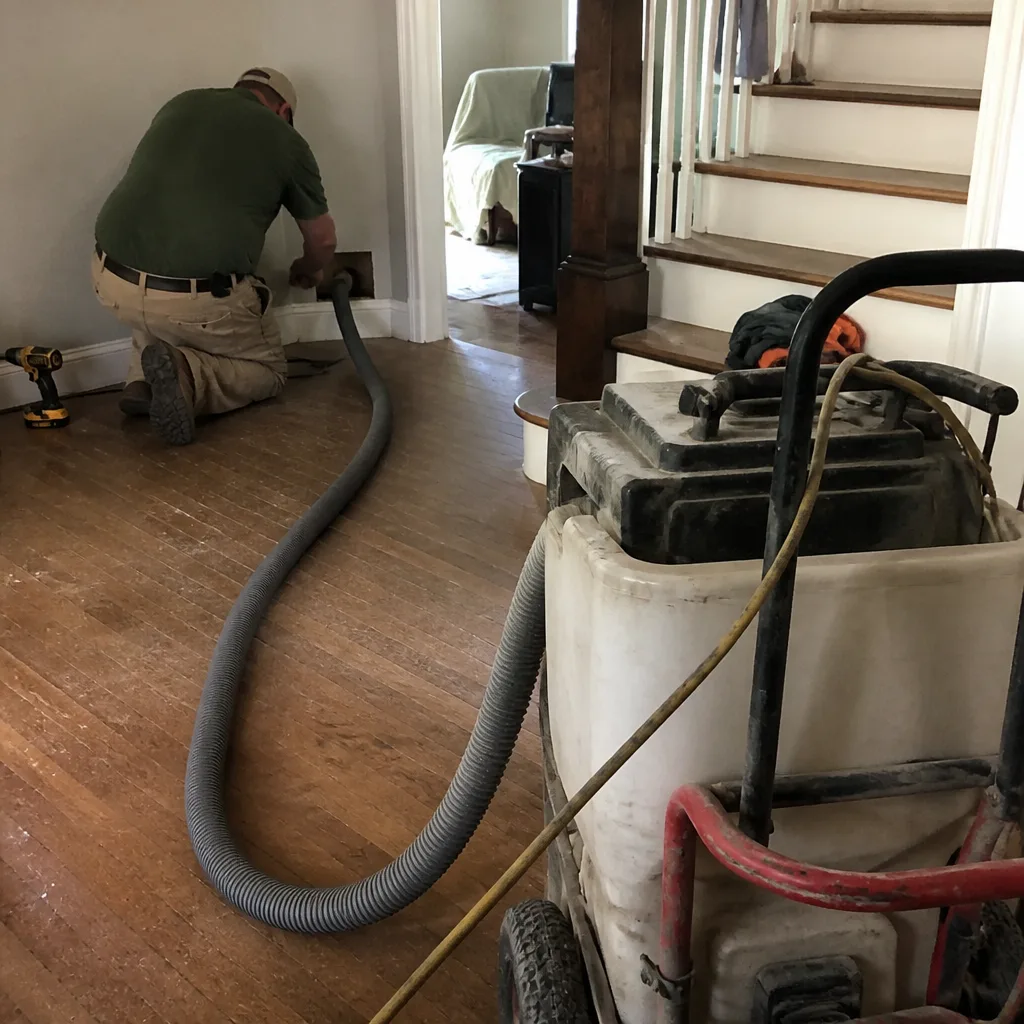 Before
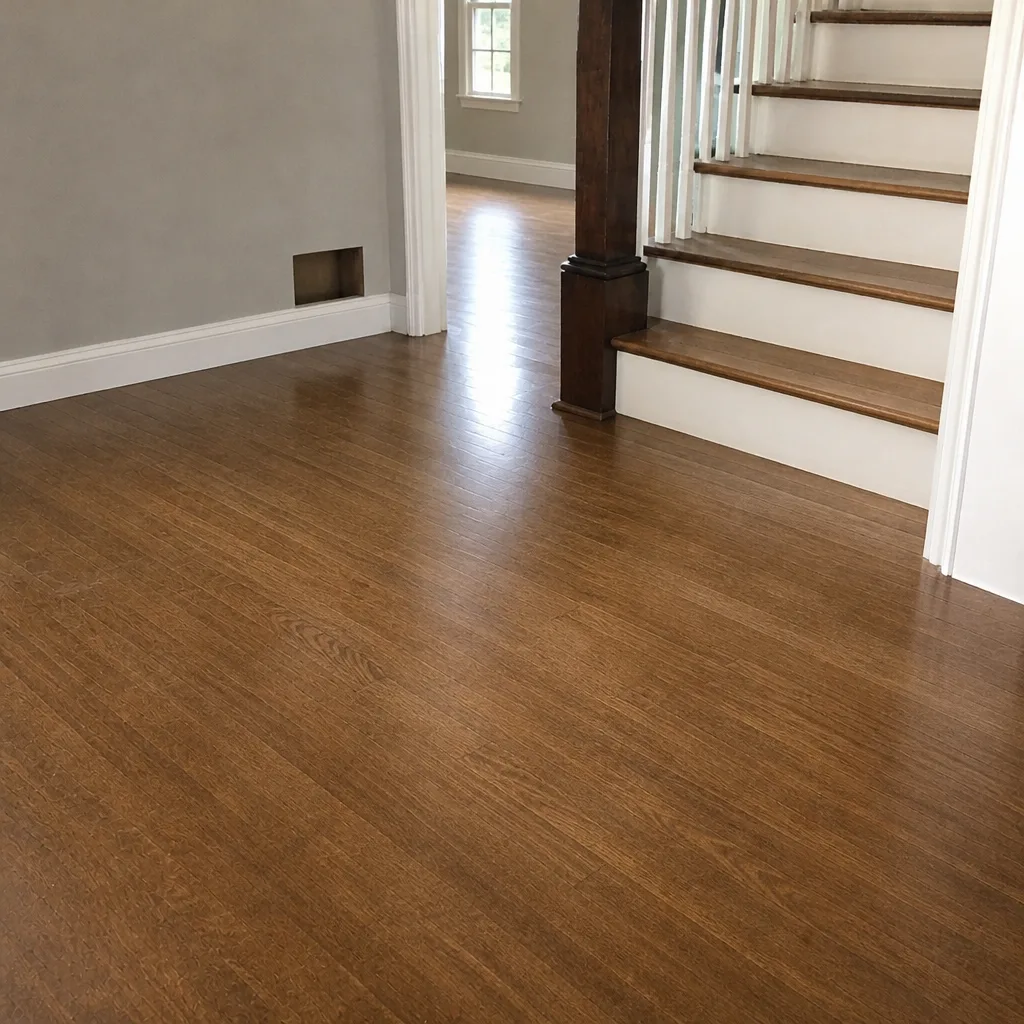 After
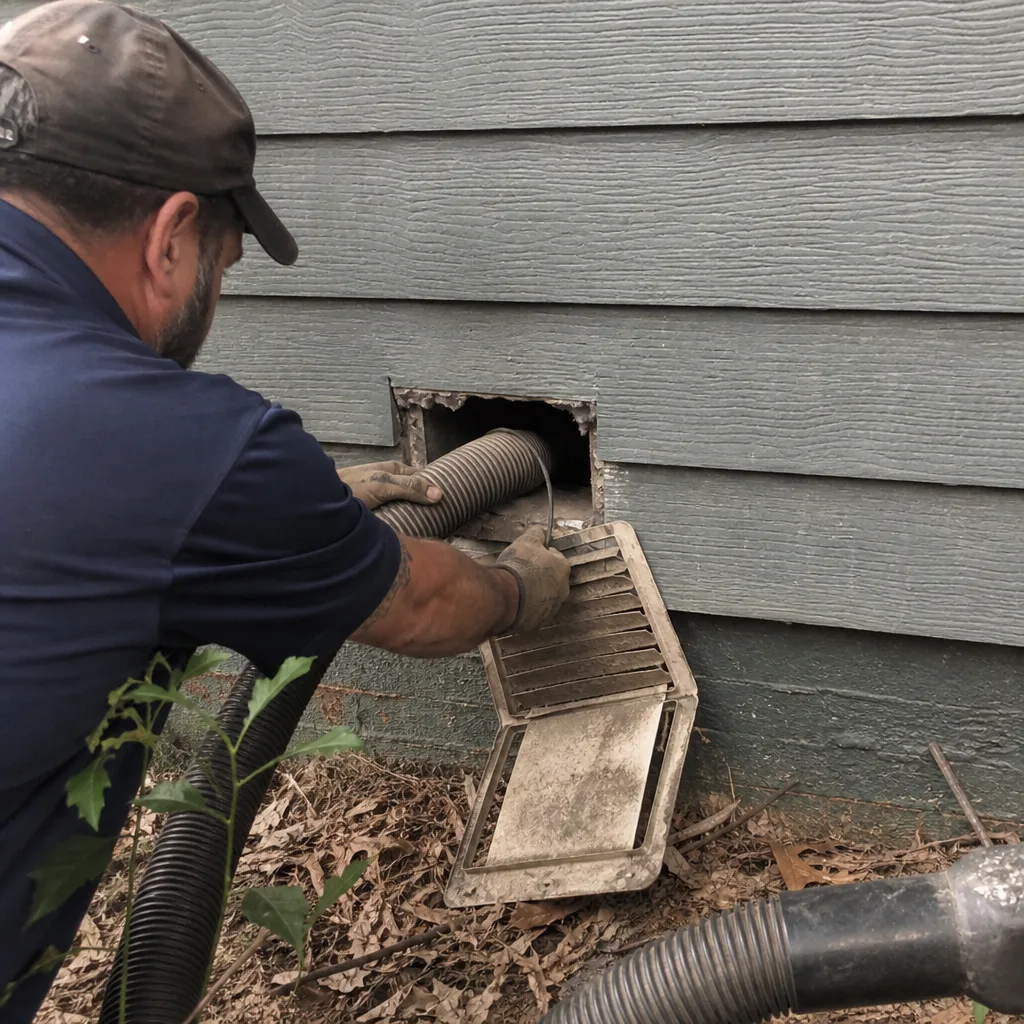 Before
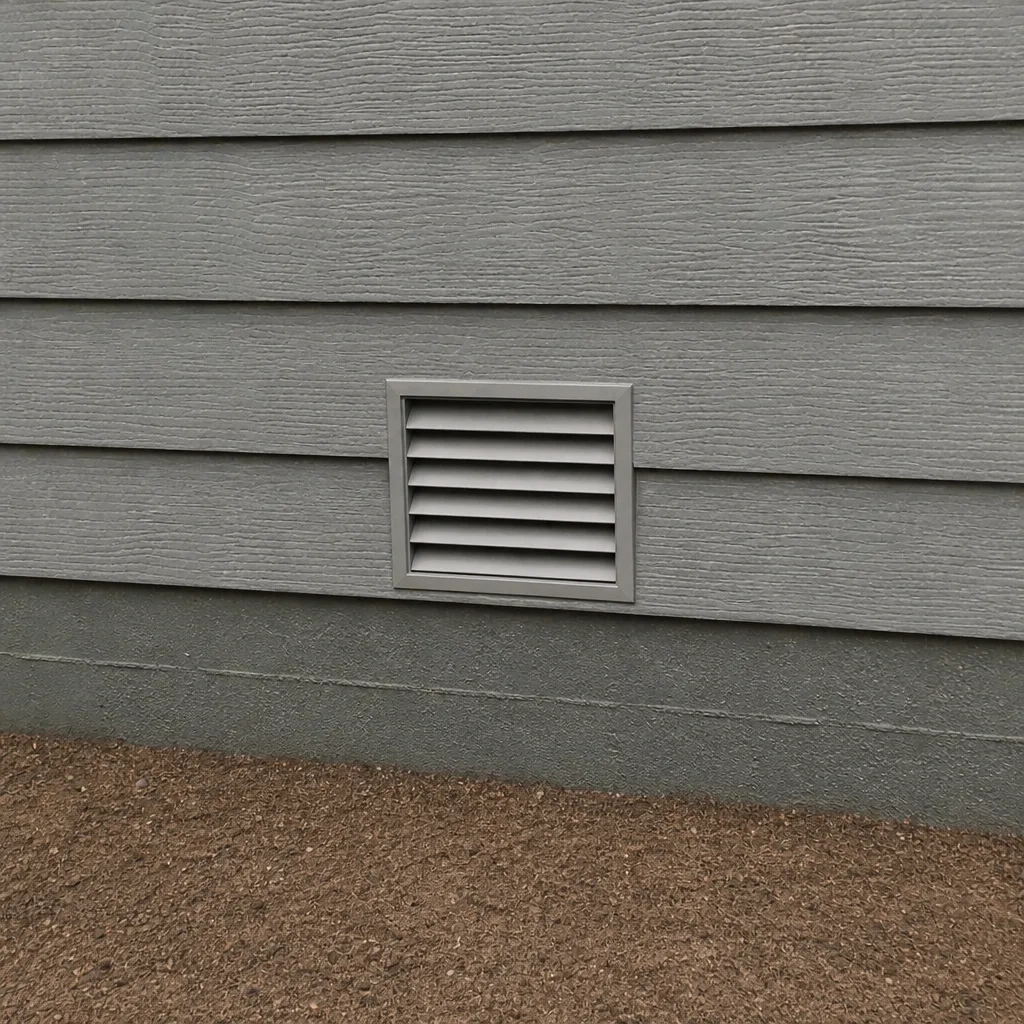 After
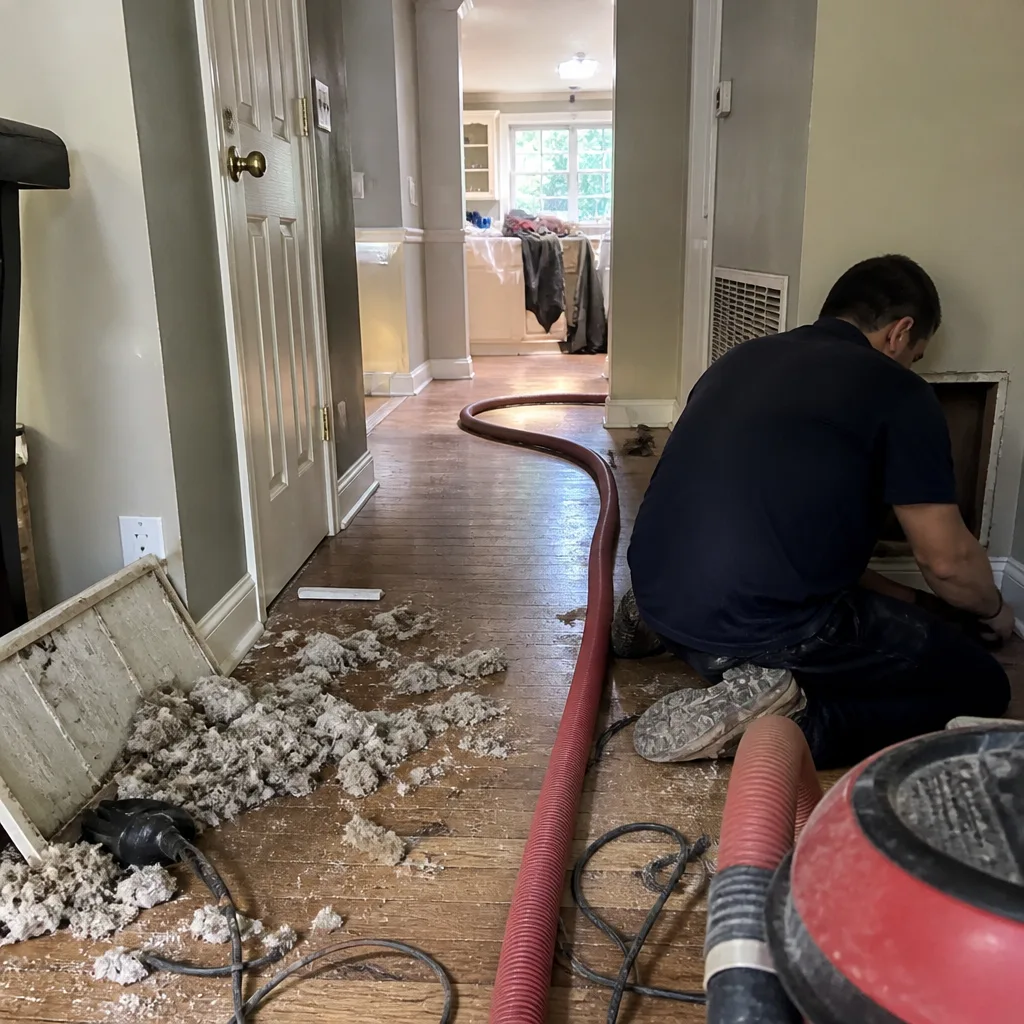 Before
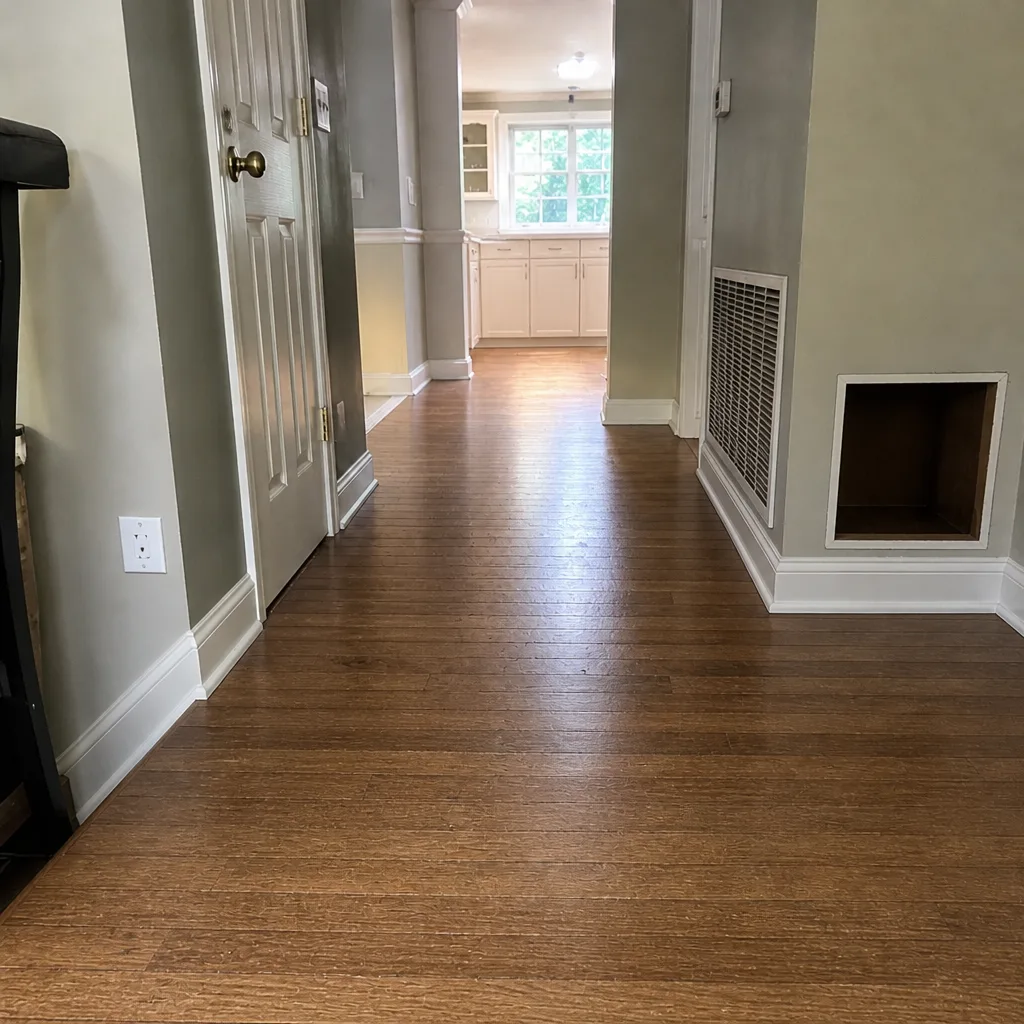 After
When to Call a Professional
Call a professional when the problem extends past the register. That means visible mold, rodent evidence, post-fire residue, post-renovation debris, a recent HVAC replacement, or filters that clog far faster than they used to. It also means any time you smell a persistent musty or stale odor coming from a supply register during the cooling season – that’s the duct telling you contamination has reached the coil face or the trunk line. In Hayes Barton’s humid summers, that signal is easy to ignore and hard to fix without source-removal cleaning.
Air Duct Cleaning Hayes Barton offers free estimates in Hayes Barton – call (833) 468-5692. We answer 24/7. Fast dispatch from 7am to 7pm, Sunday through Friday.
Frequently Asked Questions
You can clean the registers, grilles, and the first foot or two of accessible ductwork yourself, and that work is genuinely useful for routine hygiene. You cannot clean the main trunk lines, coil face, or blower wheel with consumer equipment. Those are where most contamination lives, so DIY stops well short of a full result.
The equipment for a proper DIY cleaning runs a few hundred dollars, but it only addresses register-level dust. Full professional cleaning covers the trunk lines, plenum, coil, and blower, and those costs come with the service. The real comparison is a cheap partial clean versus a complete one – call (833) 468-5692 for a free estimate and a clear number.
It can if you push a rigid tool past the register boot into a flex run. The inner liner is a thin membrane, and the boot connection is only secured with a zip tie or mastic. A shop vac with a crevice tool used at the register itself is safe; extensions into the run are not.
Yes. Drywall dust, sawdust, and construction grit work into duct runs throughout the project and settle deep in the trunk lines and on the coil face. A shop vac at the register won’t clear it, and clogs will keep recurring until the source is removed professionally.
Most homes benefit from professional cleaning every three to five years, with more frequent service if there are pets, allergy sufferers, or a recent renovation. Homes with visible or ongoing contamination signals should be assessed sooner. Call (833) 468-5692 for a free estimate on where your system sits.
Professional cleaning pairs mechanical agitation – a Rotobrush rotary brush system – with simultaneous negative-air extraction using Nikro equipment. Nothing you can buy at retail combines those two elements, and containment during the cleaning is what prevents dislodged debris from landing back in your rooms.
The Bottom Line
DIY air duct cleaning is worth doing honestly, within its real limits. Registers, grilles, the accessible boot, and filters are all fair game – and doing them well extends the useful life of a professional cleaning between service calls. What DIY cannot touch is the contamination that actually degrades air quality: main trunk debris, coil face buildup, blower wheel packing, and deep duct contamination. When mold, rodents, smoke, renovation debris, or a new HVAC system is in the picture, professional source-removal cleaning is the only path that works. A hybrid approach – honest DIY work between proper professional cleanings – is what produces the best air quality and the best long-run cost.
Air Duct Cleaning Hayes Barton provides free estimates in Hayes Barton on cleaning, sanitizing, duct repair, sealing, and dryer vent service. Call (833) 468-5692 for a free estimate. We answer 24/7. Fast dispatch from 7am to 7pm, Sunday through Friday. Before-and-after photos of your own ducts come with the service, and the written estimate sets the final price.
Written by the team at Air Duct Cleaning Hayes Barton.