
Last updated November 23, 2026
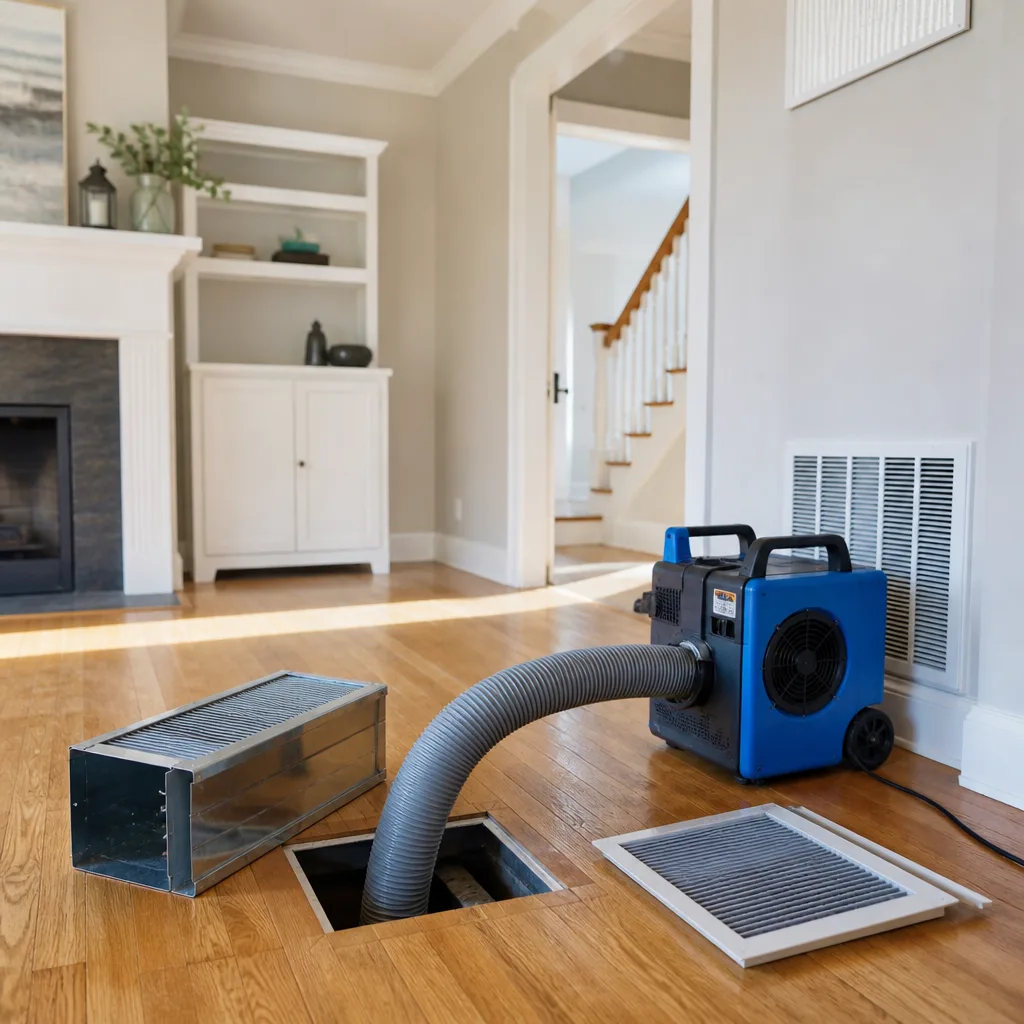 Whole-home duct cleaning
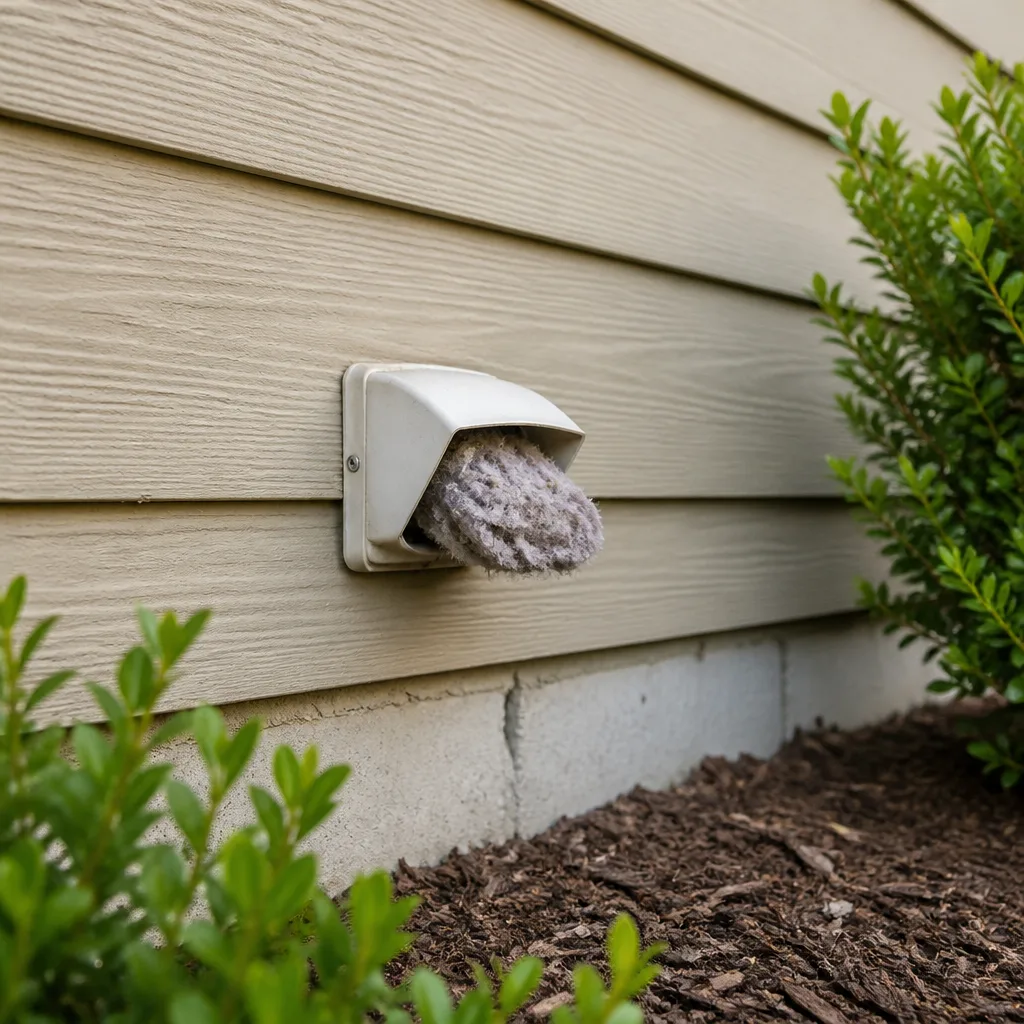 Dryer vent cleaning
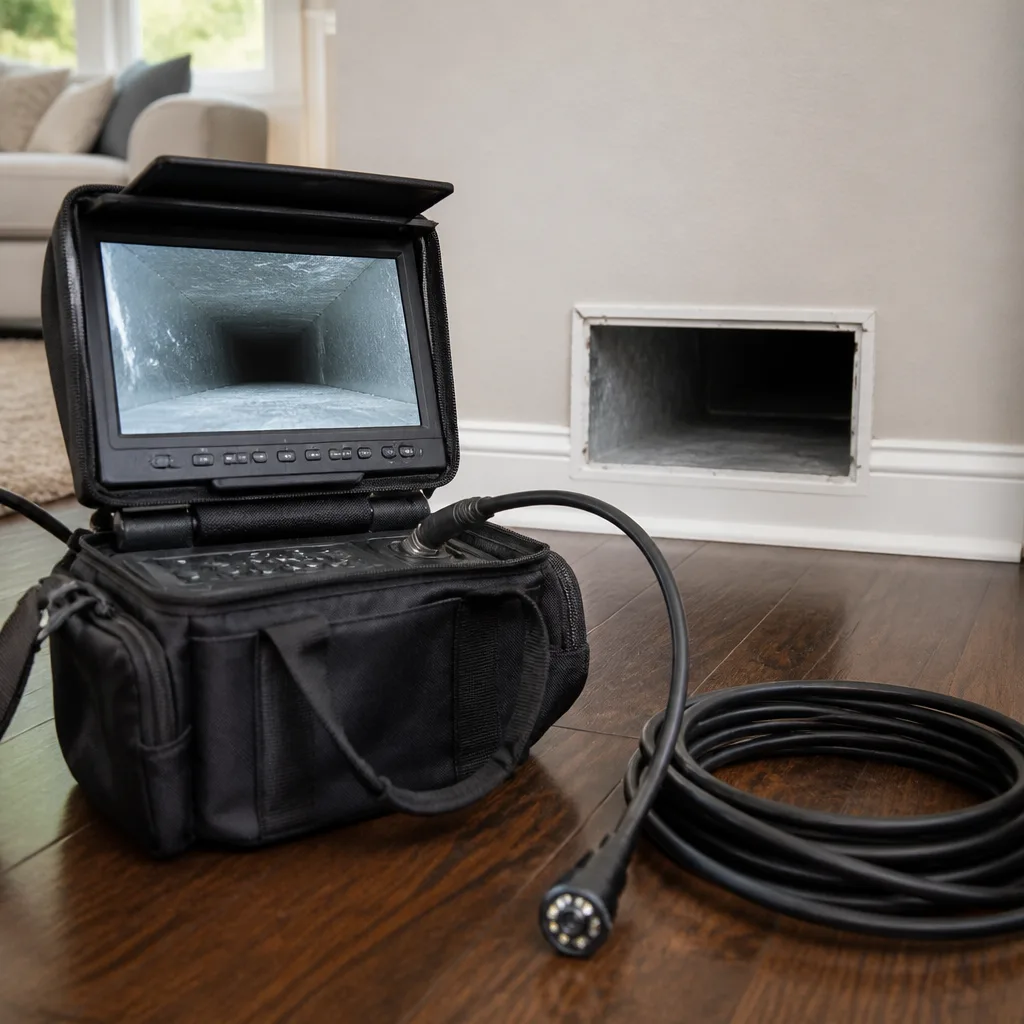 Camera inspection
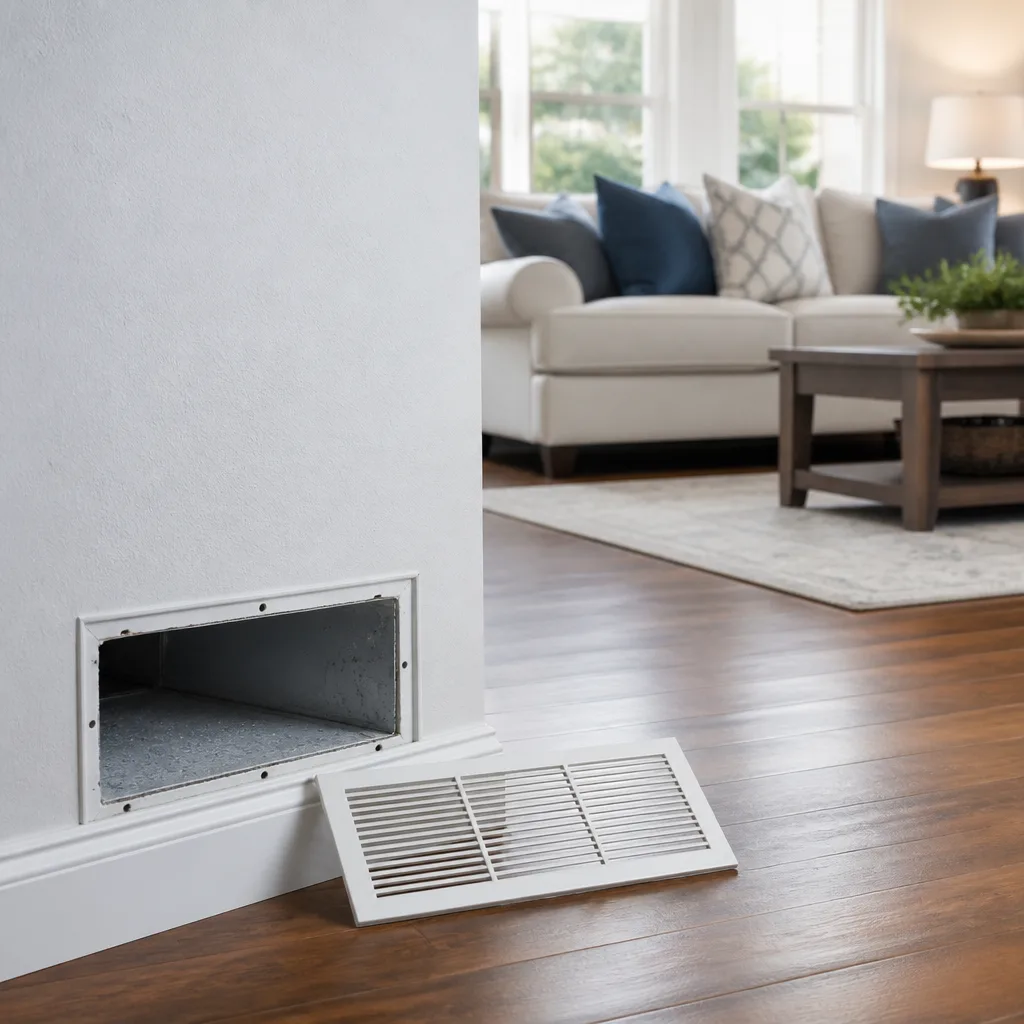 Sanitizing & deodorizing
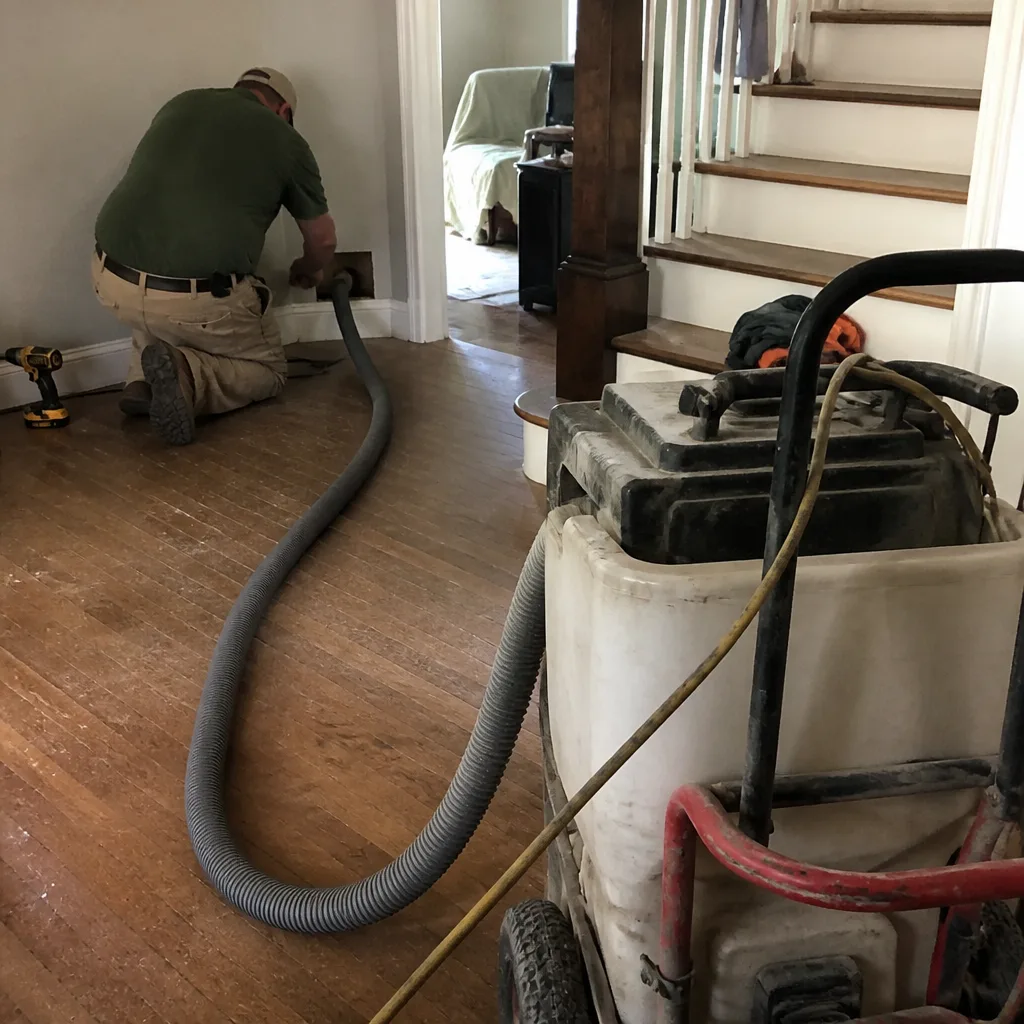
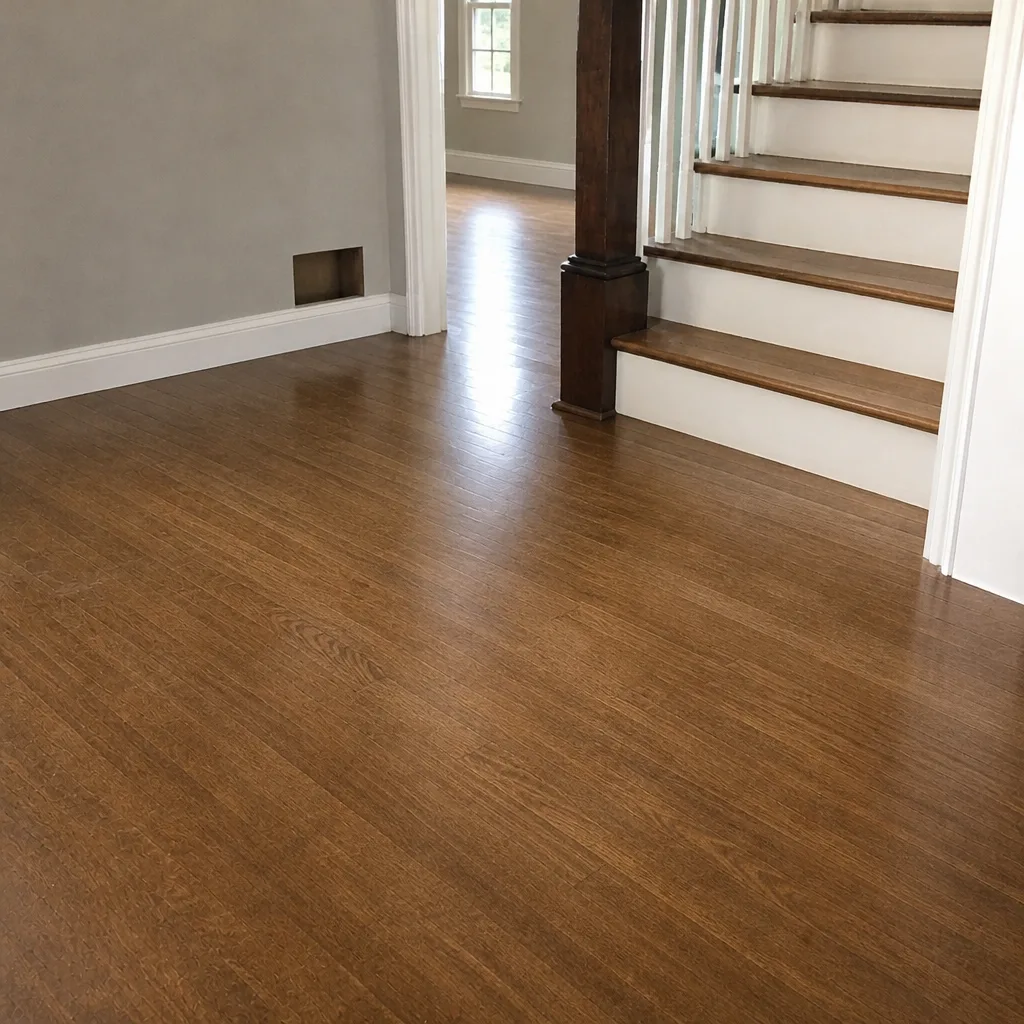
Whole-system duct and dryer vent check with before-and-after photos - you see exactly what came out of your vents
That "$99 whole-house special" is a bait ad - the real number appears once they are in your hallway, or the "clean" is a shop-vac at the register. We photograph the inside of your ducts before and after instead.
Choosing the Right Air Duct Cleaning Brand: A Buyer’s Guide for Hayes Barton
Most homeowners in Hayes Barton shop for duct cleaning the same way they shop for a refrigerator: they compare names on the front of the box. That’s the wrong instinct, and it’s the one that costs people the most. The name that determines whether your ducts actually get clean isn’t the company on the truck. It’s the name on the vacuum, the rotary brush, and the filtration unit the technician rolls through your front door. Those are the tools that decide whether dislodged dust leaves your house or just gets pushed into the next room.
This guide walks you through what professional-grade duct cleaning equipment actually is, what the brands mean, how to ask the right questions before you book, and how to spot the difference between a real full-scope operation and a crew with a shop vacuum and a coupon. If you’re hiring in Hayes Barton, this is the buying framework we’d want in your hands.
Quick Answer
The right air duct cleaning brand in Hayes Barton is the company that can name its vacuum, its brush system, and its exhaust filtration setup without hesitating. Look for professional-grade systems like Rotobrush rotary brush equipment, Nikro negative-air extraction, and Abatement Technologies filtration, because those tools define what a cleaning actually removes. A brand name alone proves nothing; the equipment behind it and the process of using it correctly do.
Key Takeaways:
- The equipment manufacturer, not the company logo, is the real quality signal.
- A vacuum’s HEPA filtration matters as much as its suction.
- Full-scope indoor air quality work (cleaning, sanitizing, repair, sealing, dryer vents) requires different equipment than a single-service crew.
- Franchise names don’t guarantee skill; local technical specialization often outperforms.
- Ask specific questions about CFM, brush type, and negative pressure before you book.
Styles & brands we work with
- Whole-home duct cleaning
- Dryer vent cleaning
- Camera inspection
- Sanitizing & deodorizing
Table of Contents
- What Equipment Brands Actually Define Professional Duct Cleaning?
- Why HEPA Filtration on the Vacuum Matters More Than Suction Alone
- How to Evaluate a Hayes Barton Duct Cleaning Company Using Equipment as the Benchmark
- What ‘Full-Scope IAQ Company’ Actually Means in Terms of Equipment
- Franchise or Local Specialist? The Real Trade-Offs in a Market Like Hayes Barton
- Filtration Ecosystems: Why Honeywell and Aprilaire Systems Change the Job
- Dryer Vent Cleaning as a Safety Service, Not an Upsell
- How Do You Verify the Work Was Actually Done?
What Equipment Brands Actually Define Professional Duct Cleaning?
In the duct cleaning trade, three names show up repeatedly on professional equipment: Rotobrush, Abatement Technologies, and Nikro. If a company can speak fluently about all three, you’re dealing with someone who invests in the tools commercial HVAC technicians and restoration contractors use. If they can’t name any of them, that’s your answer.
Rotobrush makes rotary brush systems that agitate duct walls mechanically while extracting debris in the same pass. That combination matters, because brushing alone loosens buildup and suction alone can’t dislodge caked-on dust. Rotobrush systems handle both at once, which is why restoration contractors and commercial HVAC techs reach for them on standard residential and light-commercial jobs.
Nikro builds negative-air equipment designed for contained, source-removal cleaning. That’s a methodology phrase worth learning: it means the equipment creates negative pressure in the duct system so dislodged contaminants get pulled out rather than blown through your living space.
Abatement Technologies makes air filtration devices used during service to capture particulate as it’s liberated. If a technician is cleaning a dusty duct run and doesn’t have filtration running alongside, small particles end up settling on furniture and inside your HVAC cabinet. Abatement units address that gap.
Ram-Air systems also appear in serious crews’ tool lockers, generally on the larger-volume vacuum and air-movement side. The point isn’t to memorize a list. It’s that a company that operates real duct cleaning equipment can hold a technical conversation about what each piece does. If you ask about their vacuum and they answer with a brand and a model, you’ve found a specialist.
Why HEPA Filtration on the Vacuum Matters More Than Suction Alone
Most homeowners focus on suction. Suction does matter, but the exhaust filter on the vacuum is what determines whether the dirt that leaves your ducts also leaves your house. A high-powered vacuum without proper filtration is a particle spray. It pulls dust off a duct wall, then pushes it out through a filter too coarse to catch the finest particles. That’s the opposite of what you paid for.
That’s why HEPA filtration is the number that matters. HEPA filtration captures particles down to a specific micron threshold, and the widely cited standard is 99.97% capture at 0.3 microns. In practice, that means:
- Fine dust and allergens get removed, not redistributed. Duct dust is largely composed of fine particles, the same size range HEPA is designed to capture.
- Pet dander and pollen stays contained. Both fall into a size range that non-HEPA exhaust filters routinely fail to catch.
- The HVAC cabinet stays cleaner. When the vacuum is HEPA-filtered, released debris doesn’t travel up into the coil and blower, so you aren’t creating a future problem while solving a current one.
- Air inside the home stays stable during the cleaning. That’s especially relevant for households with asthma or allergy sensitivities, or for anyone who just finished a renovation.
The best setups combine HEPA-grade exhaust filtration with negative pressure and Abatement Technologies filtration devices running in the work area. That’s the difference between a cleaning that actually removes contaminants and one that stirs them up.
How to Evaluate a Hayes Barton Duct Cleaning Company Using Equipment as the Benchmark
The cleanest way to evaluate a Hayes Barton duct cleaning company is to ask four technical questions. Serious operators answer them without hesitation. The wrong operators can’t answer any of them in a specific way. Here’s the sequence we’d recommend for anyone calling around Hayes Barton:
- Ask what vacuum they use and its CFM rating. CFM stands for cubic feet per minute, and it’s the standard measure of airflow. There’s no single right number for every system, but a company that can name a specific range and explain why has thought about it. A company that says “our truck vac is powerful” hasn’t.
- Ask whether the brush system is rotary or handheld. Rotary brush systems (like those on Rotobrush platforms) are the standard for mechanical agitation inside ducts. Handheld brushes work for fittable areas but can’t produce the same wall-contact force.
- Ask how they maintain negative pressure in the ductwork during the job. The answer tells you whether the crew understands source-removal cleaning or is improvising. A specific answer about how the vacuum connection creates a directional pull through the system is what you want.
- Ask what air filtration runs during service. A better answer includes a HEPA-rated exhaust filter and often a room-side air filtration device. Abatement Technologies units come up in these conversations.
Add one more: ask what happens after the cleaning when they find damaged ductwork, gaps in flex connections, or filter housing issues. A specialist crew has a plan. A one-task crew has to refer it out.
If you want to understand what a full-scope visit actually includes, our air duct cleaning service walkthrough covers the process step by step, with the equipment and sequence laid out.
What ‘Full-Scope IAQ Company’ Actually Means in Terms of Equipment
A full-scope indoor air quality company isn’t a marketing label. It’s a specific list of capabilities backed by specific tools. A crew equipped for cleaning, sanitizing, duct repair, and sealing behind a single call needs substantially more gear than a crew that only sweeps ducts. That difference is worth examining before you hire in Hayes Barton, because most homes need more than one of these services over a multi-year window.
Here’s the practical breakdown of what full-scope equipment actually covers:
- Duct cleaning requires an agitation system (rotary brush) and a high-CFM HEPA-filtered vacuum with a negative-air setup. Single-service crews commonly have the vacuum and skip the agitation tools because they’re expensive and slow to use properly.
- Sanitizing requires EPA-registered products and proper application equipment. The products matter as much as the process; anything not on the EPA list isn’t something you want sprayed into your ducts.
- Duct repair (sealing leaks at joints, reconnecting flex runs, addressing crushed transitions) needs hand tools, mastic, and often backing hardware. Single-task crews usually don’t carry it.
- Duct sealing is a separate discipline from cleaning; it addresses distribution efficiency and pressure balance.
- HVAC cleaning covers the coil, blower, and cabinet. It runs on different equipment than duct interiors. Our HVAC cleaning page lays out the coil-and-cabinet side of the work.
- Dryer vent cleaning uses brushes, drop cloths, and agitation tools sized to the vent run, and it’s a fire-safety service, not a ductwork-related add-on.
Companies with all of that gear can handle a whole-house problem in one visit. Everyone else hands you off to a second contractor for the sealing, a third for the HVAC coil, and a call to somebody else for the dryer vent. If your Hayes Barton home has a filtration system in the loop, the full-scope operation is more likely to understand how it all fits.
Franchise or Local Specialist? The Real Trade-Offs in a Market Like Hayes Barton
A familiar brand name doesn’t guarantee a better cleaning. Franchise systems deliver consistency in marketing and customer service template, but the actual equipment and its operator are still local. A tightly managed franchise in a nearby city and a loosely managed franchise running out of a van can both wear the same logo. That’s why the more useful question isn’t “which brand,” but “what equipment and what process.”
Here’s how the trade-offs usually break down for Hayes Barton homeowners:
What franchises typically deliver: standardized pricing structures, call-center booking, and consistent customer service language. That’s real value for people who don’t want a technical negotiation. What they don’t guarantee is that the technician who arrives has used a rotary brush system recently, or that the vacuum running in your home meets a HEPA threshold.
What local technical specialists typically deliver: direct conversations with people who can talk through CFM, brush mechanics, and filtration setup. A Hayes Barton specialist serving Hayes Barton homes tends to have a narrower geographic footprint and a deeper stake in the community’s word of mouth. The trade-off is that local operators vary widely in quality, so the questions in the section above matter more than ever.
The right rule: use equipment and process as the tiebreaker. If a franchise answers the four technical questions clearly and a local operator does too, either is a reasonable hire. If one of them can’t, you have your answer regardless of the logo on the truck. What you should not do in Hayes Barton is pick a name because it’s recognizable. That’s how duct cleaning got its reputation for bait-and-switch pricing.
One more local note: Hayes Barton’s mix of older homes and renovations means many duct systems here have been modified more than once. A crew that understands duct repair and sealing is more likely to spot the crushed flex run behind a newer cabinet than a crew that only knows how to run a vacuum.
Filtration Ecosystems: Why Honeywell and Aprilaire Systems Change the Job
Honeywell and Aprilaire are the two names you’ll see most often on residential whole-home filtration and humidification equipment. Both brands manufacture media filters, electronic air cleaners, and humidifiers designed to work with a home’s HVAC system. If you have either brand installed in your Hayes Barton home, the duct cleaning conversation gets more technical, not less.
Here’s why. A whole-home filtration unit and an electronic air cleaner are part of the same air path as the ductwork. If the duct system has dirt buildup, the filter and cleaner are working harder to compensate. If the filtration housing has a bad seal or a gap, the air quality benefit drops, and the duct cleaning doesn’t solve it alone. A crew that understands Honeywell and Aprilaire systems thinks in terms of the whole path:
- The filter housing, and whether it’s sealed properly against bypass air.
- The return and supply duct runs, and whether they’re maintaining pressure balance.
- The coil and cabinet, which collect debris that filters miss.
- Humidification equipment, where mineral buildup and pad wear affect air quality.
When we look at a home with a Honeywell or Aprilaire system, we treat filtration as part of the cleaning plan, not a separate service call. That’s why the equipment matters: an operator familiar with these brands is better positioned to spot filtration issues while the ducts are open. If they talk about the filtration housing as part of the job, you’re working with someone who understands the system.
Dryer Vent Cleaning as a Safety Service, Not an Upsell
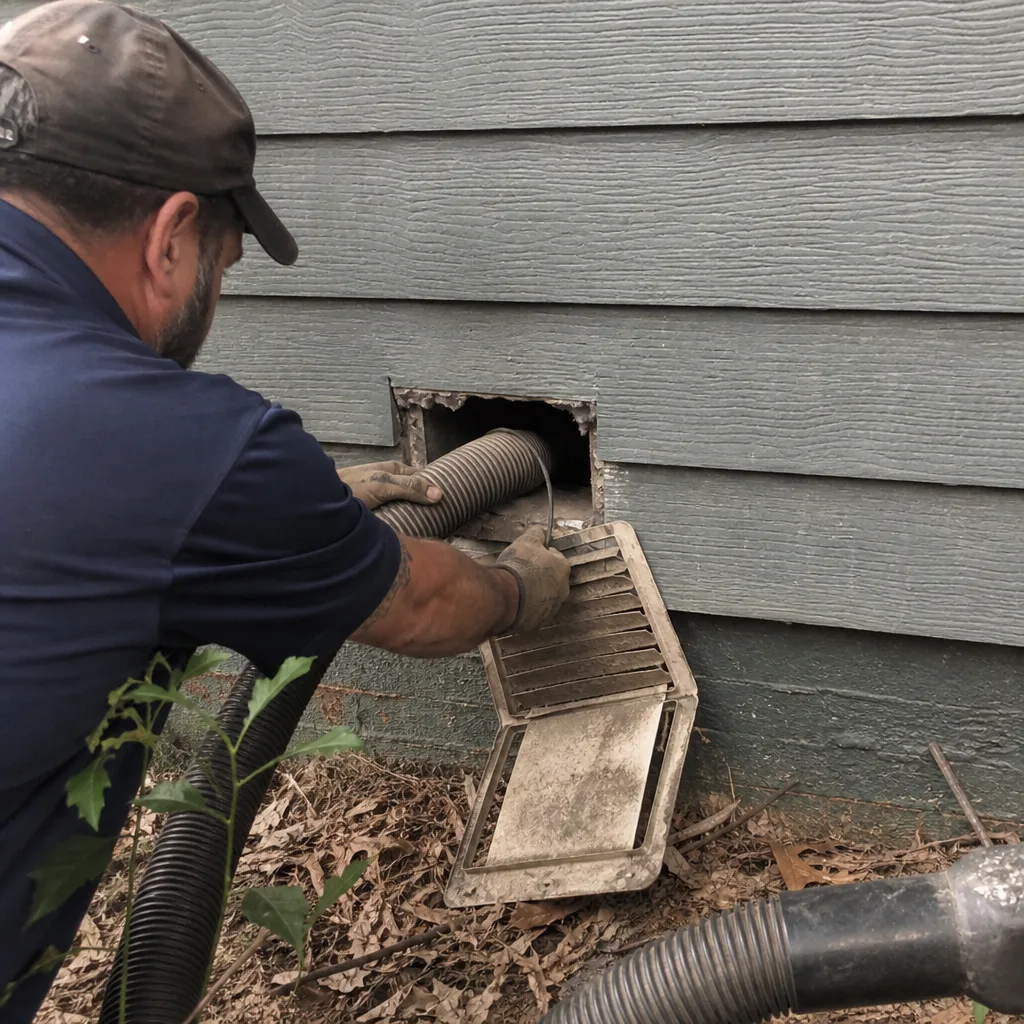
Dryer vent cleaning gets treated as an add-on by many duct cleaning crews. That’s a mistake. A clogged dryer vent is a residential fire risk, and the buildup is lint, which is highly combustible. In a home where the vent run is long or the dryer has run for years without a cleaning, lint accumulation can restrict airflow and let heat build up where it shouldn’t. That’s the reason we treat dryer vent cleaning as a dedicated safety service, not a trailer on the duct cleaning invoice.
A proper dryer vent cleaning involves:
- Disconnecting the dryer vent from the appliance and cleaning the interior of the full run.
- Using brushes sized to the vent diameter with agitation and extraction.
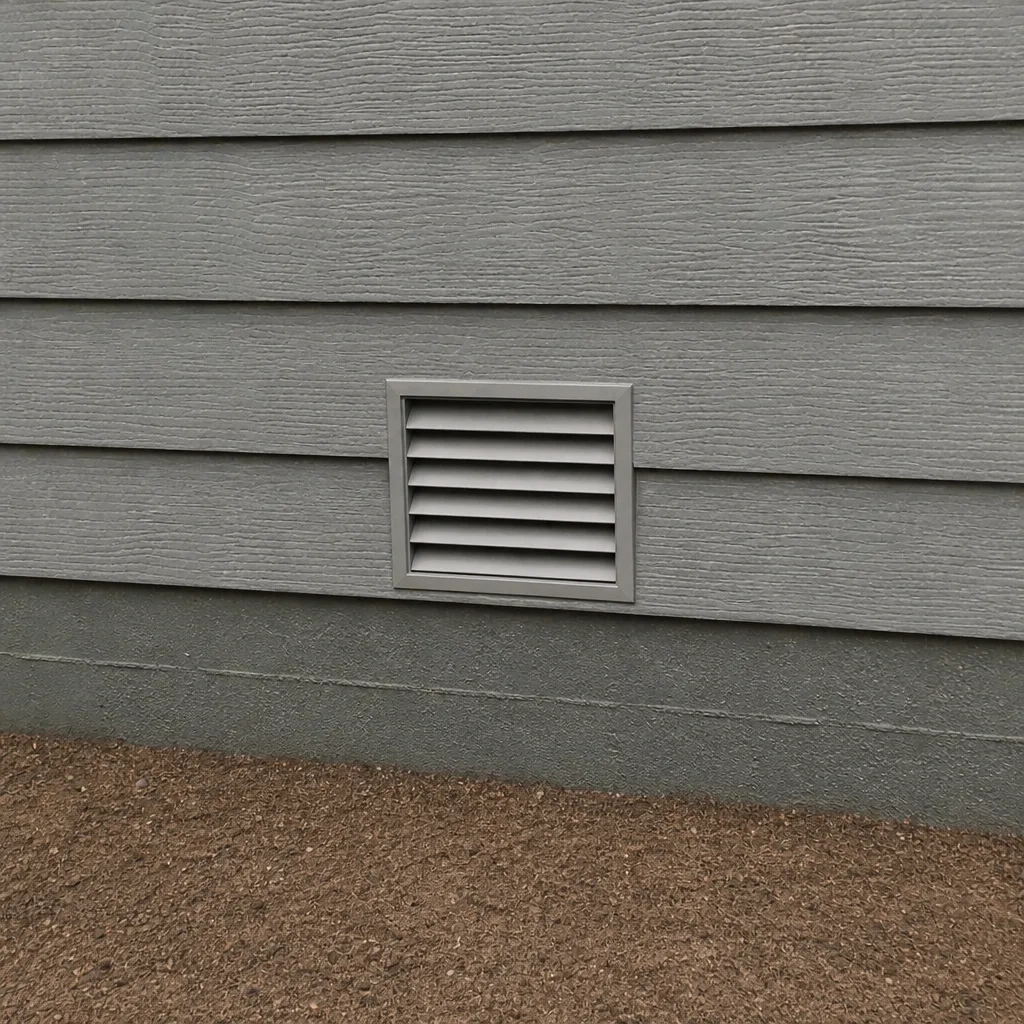
- Checking the outside termination for blockages, crushed sections, or a damaged hood.
- Reconnecting and confirming the run has proper airflow before leaving.
In Hayes Barton, older homes often have longer or rerouted dryer vent runs than newer construction, which means more opportunity for lint to settle and less natural airflow to keep it moving. That’s not a marketing problem; it’s a mechanical one. If your dryer has been taking longer to dry clothes or feels hot on the outside of the door, that’s a signal worth acting on. Our dryer vent cleaning service covers the full run, including that outside termination check.
A company that treats dryer vents as a real service will schedule it as its own visit or explicitly in the same booking, with dedicated equipment. A company that treats it as an upsell will quote a short price and take ten minutes on it. Ask up front what the dryer vent service actually includes before you agree to it.
How Do You Verify the Work Was Actually Done?
Verification is the buyer’s leverage against the industry’s worst practice: a low teaser price that grows once the technician is inside. The solution is process and evidence, not trust. Insist on these three things, in this order, before you book:
- One flat price per system, agreed before work starts. Not a price per vent, not a price that “depends on what we find.” A written estimate that covers the systems being cleaned, with any additional work (repair, sealing, sanitizing) quoted separately and approved in advance.
- Before-and-after photos of your own ducts. Not stock photos of duct interiors, not a picture of someone else’s job. Your duct runs, photographed at the same location before and after cleaning. Any company with a phone camera can do this, and any company unwilling to is telling you something.
- A written summary of what was cleaned and what was found. This is where repair, sealing, or filtration issues surface. If your Hayes Barton home has a Honeywell or Aprilaire system, the summary should note what was observed at the filtration housing and coil.
Ask about these before booking and watch for how directly they’re answered. Companies that do the work properly offer before-and-after photos without being asked. That’s the cleanest test of whether you’re dealing with a specialist. Our air duct cleaning Hayes Barton service operates on that principle: a flat price for the systems being cleaned, agreed in writing, with photos of your own system at the end.
The other verification point: ask how the crew handles damaged duct work found during cleaning. A specialist reconnects it or notes it for repair; a single-task crew vacuum around it and leaves. Either way, you should get a straightforward answer up front.
Common Mistakes to Avoid
- Choosing on price alone. A low advertised price with no equipment detail is the pattern that produces surprise invoices. Ask what’s included in writing before you agree.
- Assuming a recognizable brand means a good cleaning. The name on the truck tells you nothing about the vacuum and brush system behind it. Ask about the tools.
- Skipping the HEPA question. A high-suction vacuum with a coarse exhaust filter is just moving dust around. Ask what filtration runs alongside the cleaning.
- Treating the dryer vent as an optional add-on. It’s a fire-safety service with its own equipment and purpose. In Hayes Barton’s older homes, some vent runs are long and turn corners, which makes a proper full-run cleaning more important, not less.
- Not asking about duct repair and sealing. Cleaning without addressing gaps and leaks means the duct system goes back to pulling in household dust. Ask whether the crew can repair and seal, or whether you’ll be calling someone else.
- Accepting the cleaning without before-and-after photos. Photos of your own duct runs are the simplest protection you have against work that wasn’t done as billed.
- Not asking about filtration compatibility. A crew unfamiliar with Honeywell or Aprilaire systems may miss issues at the filter housing or coil. If your home has either brand, mention it when you call.
See the difference
 Before
 After
 Before
 After
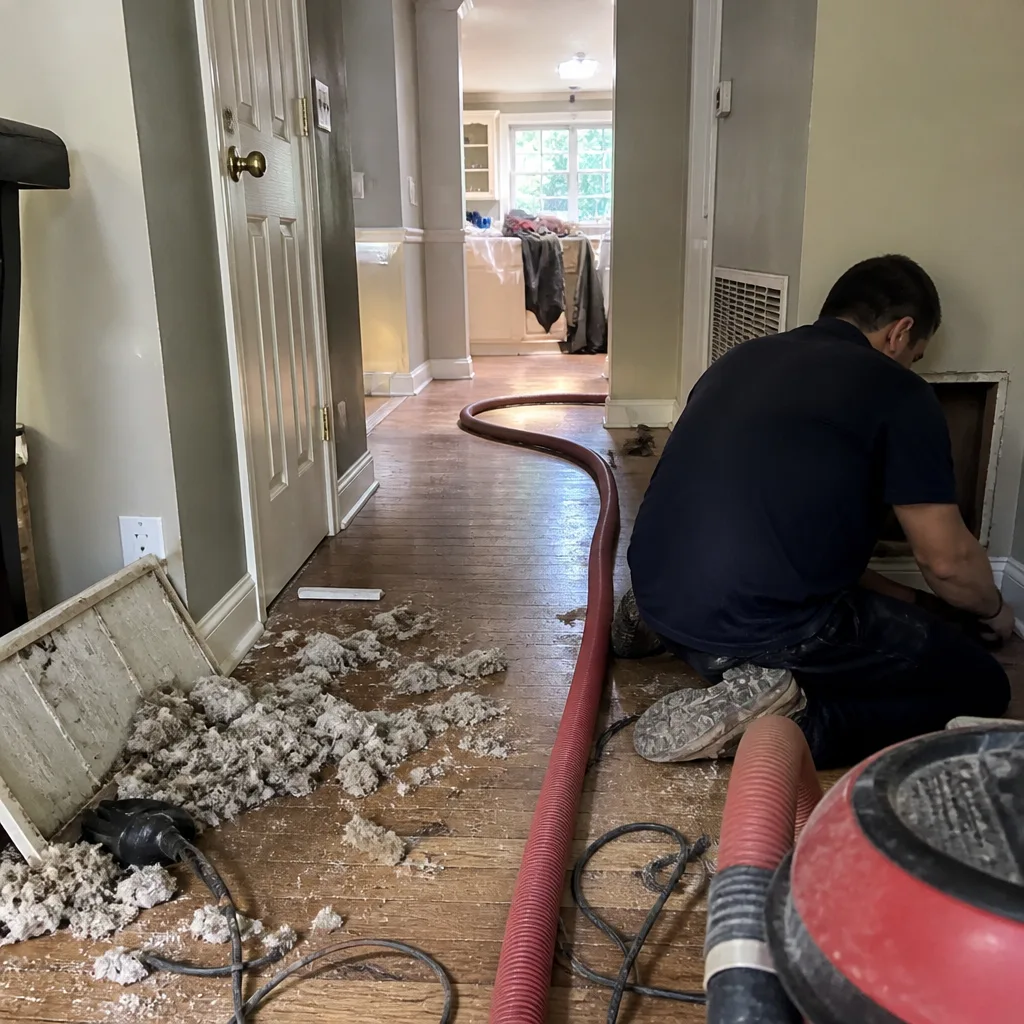 Before
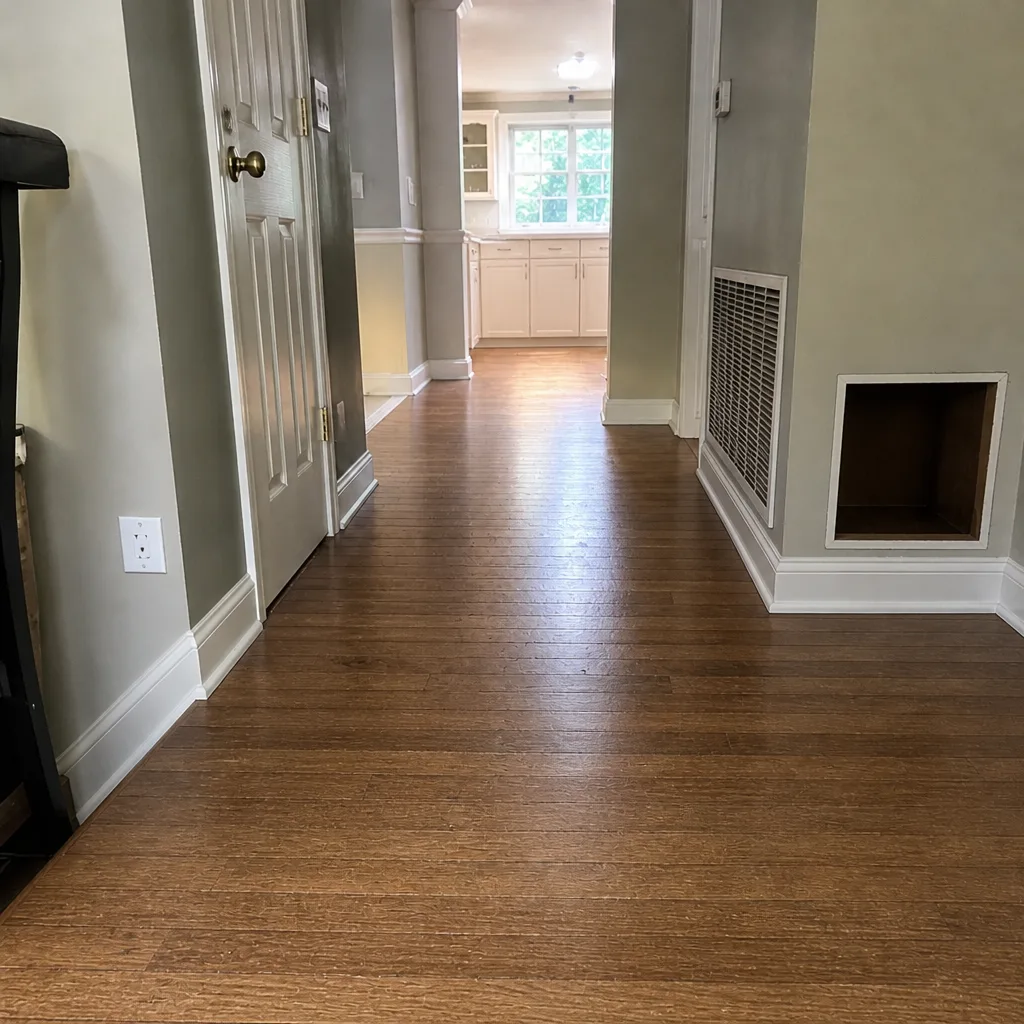 After
When to Call a Professional
You don’t need a duct cleaning on a fixed schedule; you need one when there’s a reason. The clearest triggers are a recent renovation that produced heavy dust, a new HVAC system or major HVAC repair (which is often the moment old ductwork becomes visible), a move into a home whose duct history is unknown, or allergy symptoms that seem worse indoors. If the dryer is taking longer to dry clothes or running hot, that’s a dryer vent signal and worth a separate call. If you’ve noticed visible dust trails at the supply registers, that’s a ductwork issue too. Air Duct Cleaning Hayes Barton offers free estimates in Hayes Barton – call (833) 468-5692. We answer 24/7. Fast dispatch from 7am to 7pm, Sunday through Friday. The estimate is free, and the written estimate sets the price before any work starts.
Frequently Asked Questions
The cost depends on the number of systems in the home, the length and condition of the duct runs, and whether repair, sealing, or dryer vent cleaning is added. We price per system, agreed in writing before work starts, so you’re not comparing a teaser price against a real one. Call (833) 468-5692 for a free estimate in Hayes Barton.
Cheap quotes usually reflect a smaller scope of work: less equipment, fewer systems covered, no agitation tools, or no exhaust filtration. The low number on the phone often isn’t the number on the invoice once the technician is inside. Ask what equipment is being used, what systems are covered, and whether the price is fixed in writing before work begins.
Ask for before-and-after photos of your own ducts, taken at the same location. Any credible crew produces them without being asked. Ask also for a written summary of what was cleaned and what was found. If your Hayes Barton home has a Honeywell or Aprilaire system, ask whether the filtration housing and coil were inspected.
There’s no fixed interval for every home. Common triggers are a recent renovation, a new HVAC system, a move into a home with unknown duct history, or allergy symptoms that seem worse indoors. If you can see dust buildup at the registers or your return grilles look heavy, it’s worth scheduling. Call (833) 468-5692 for a free estimate.
At minimum, a HEPA-filtered high-CFM vacuum and an agitation system, usually a rotary brush setup like a Rotobrush. A full-scope operation adds negative-air equipment (Nikro-class), in-room air filtration (Abatement Technologies-style units), sanitizing equipment with EPA-registered products, and duct repair and sealing tools. Ask which of these they run and how.
It’s a separate service with its own equipment and its own safety purpose. A clogged dryer vent is a fire-safety issue, and the cleaning needs to cover the full run from the dryer to the outside termination. Ask what the dryer vent service includes before booking it as part of a duct cleaning visit.
The Bottom Line
Choosing the right air duct cleaning brand in Hayes Barton comes down to one question: can the company explain its equipment? Rotobrush rotary brushes, Nikro negative-air extraction, Abatement Technologies filtration, and HEPA-rated exhaust systems are what separate a source-removal cleaning from a dust redistribution event. A recognizable company name proves less than a technician who can name a CFM rating and describe the brush system in mechanical terms. Use the four technical questions in this guide as your filter, insist on one flat price per system set in writing, and ask for before-and-after photos of your own ducts. That combination protects you better than any star rating or ad copy ever will.
If you’d like to talk through your Hayes Barton home’s duct system and what a full-scope cleaning would actually involve, call Air Duct Cleaning Hayes Barton at (833) 468-5692 for a free estimate. We answer 24/7. Fast dispatch from 7am to 7pm, Sunday through Friday. We’ll walk you through the equipment, the process, and the price before anything starts.
Written by the team at Air Duct Cleaning Hayes Barton.