
Last updated November 23, 2026
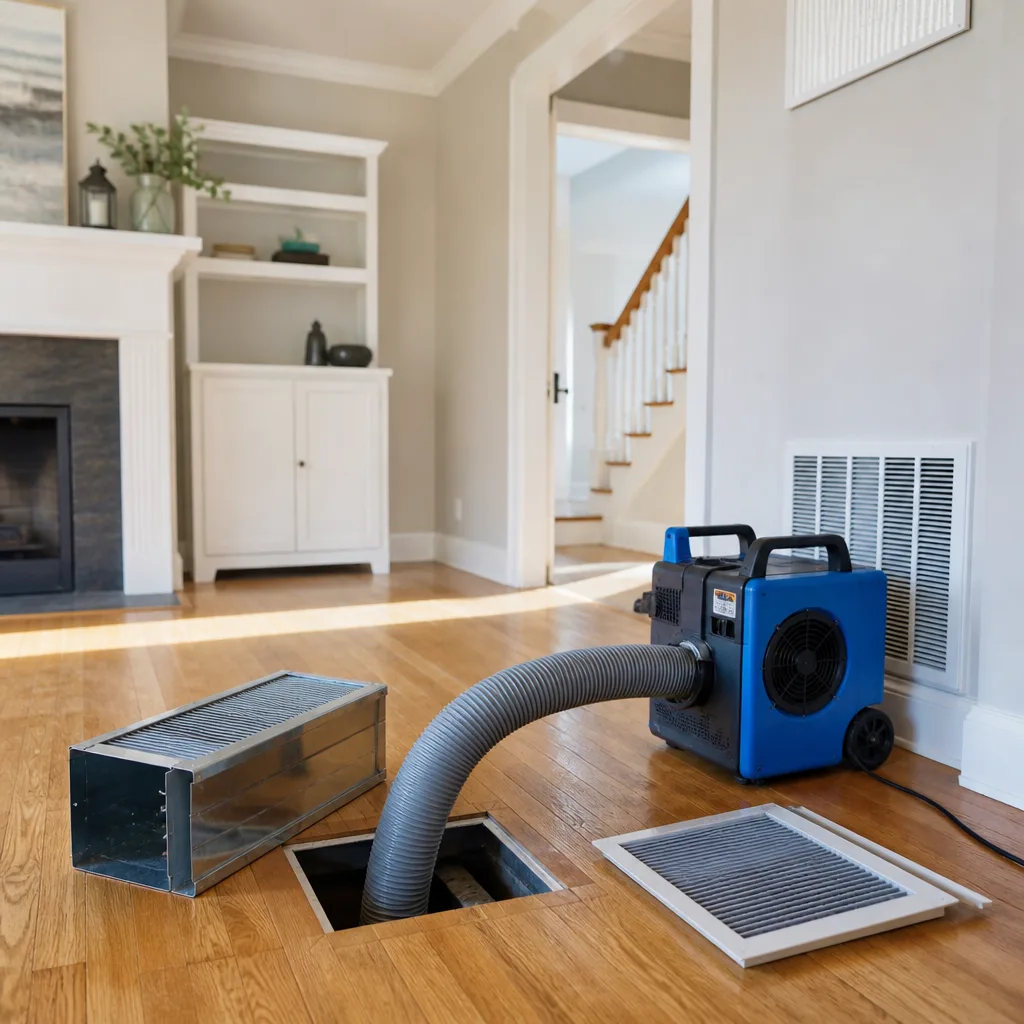 Whole-home duct cleaning
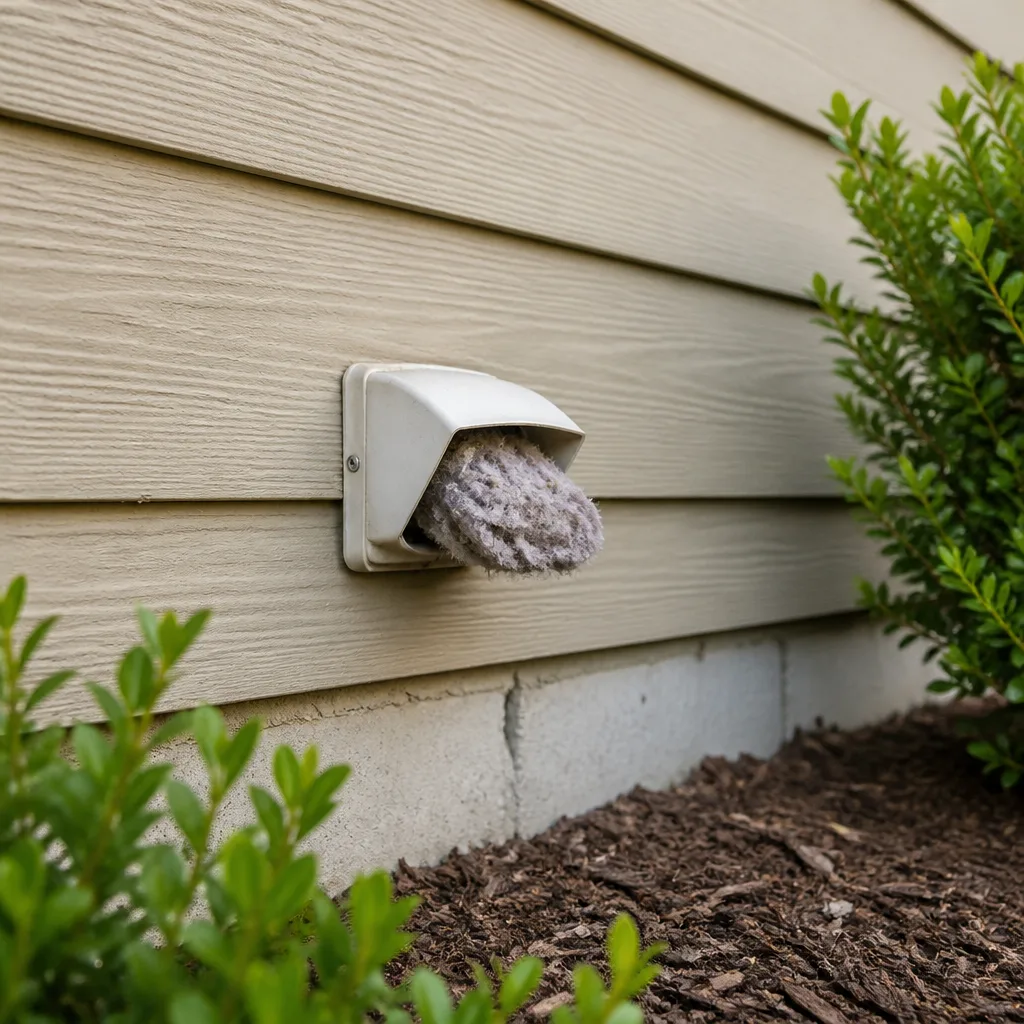 Dryer vent cleaning
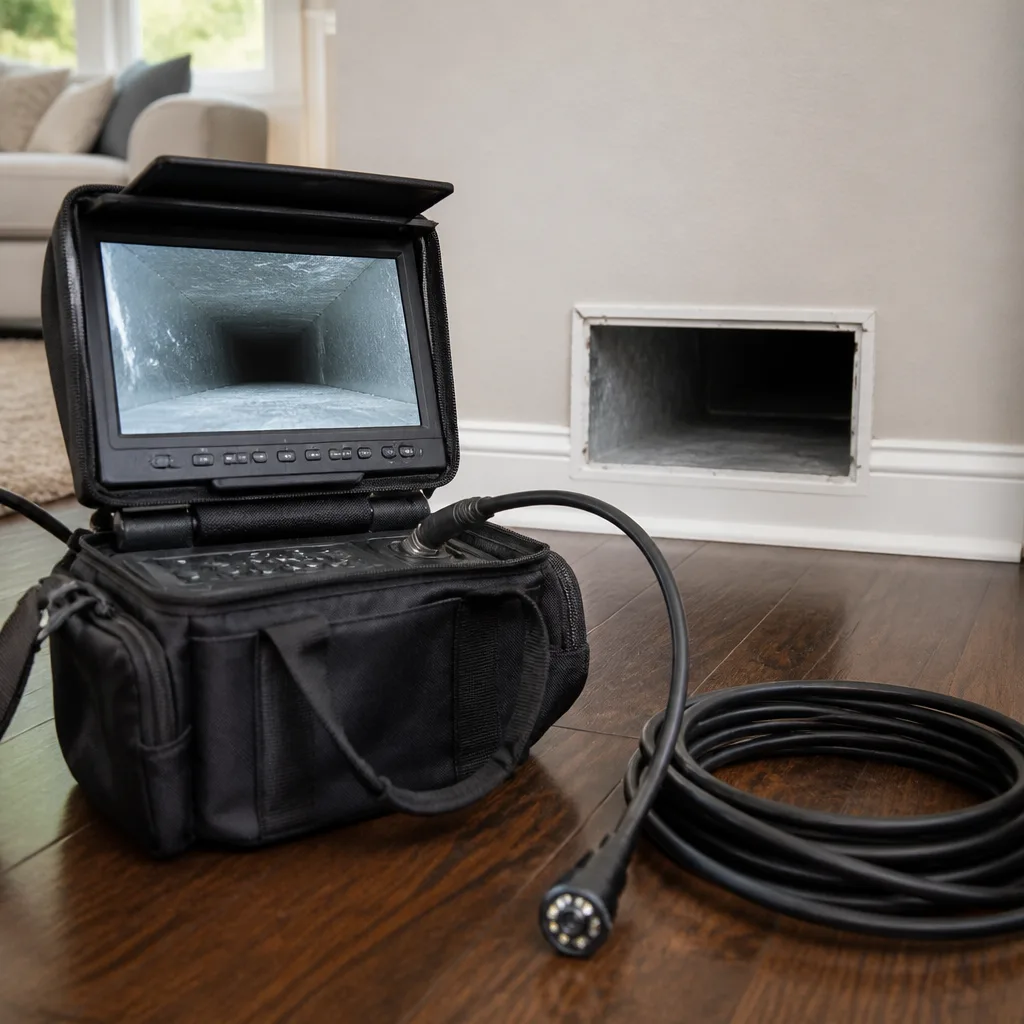 Camera inspection
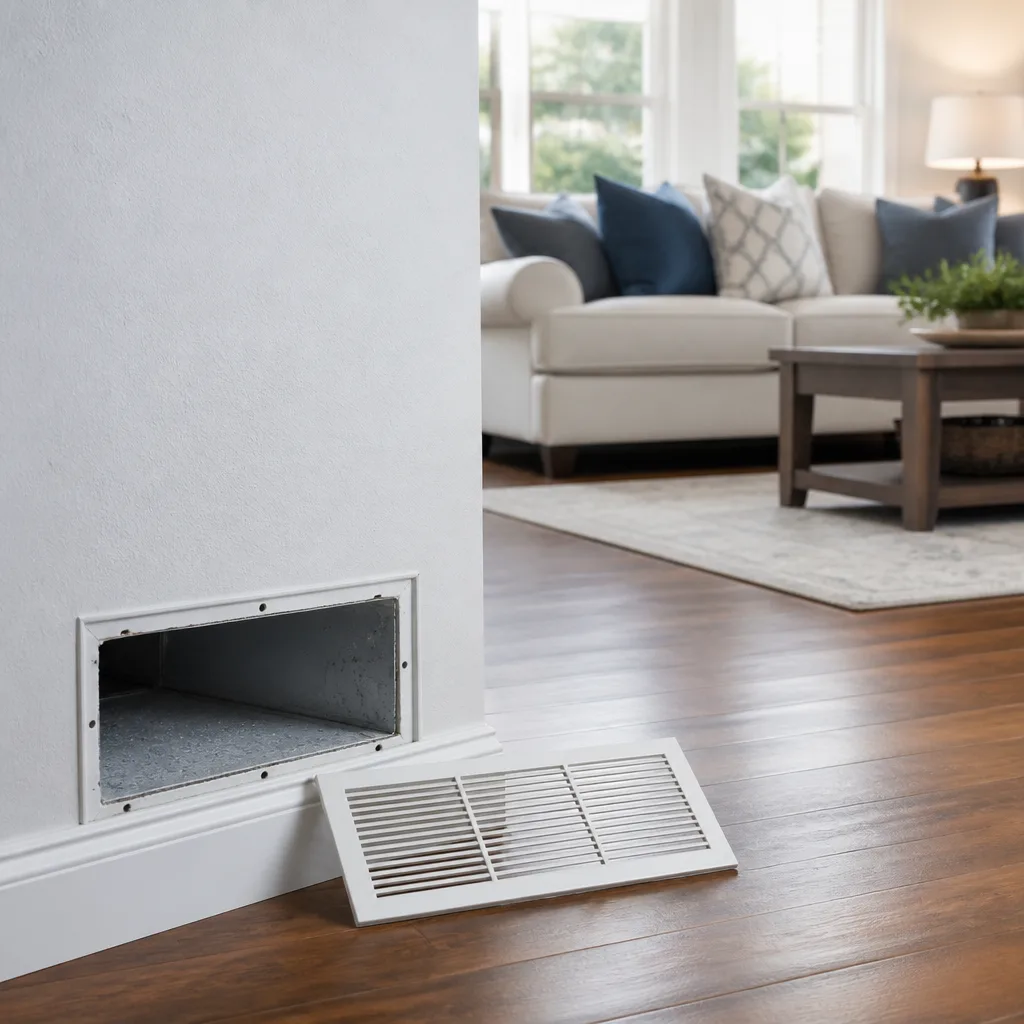 Sanitizing & deodorizing
Whole-system duct and dryer vent check with before-and-after photos - you see exactly what came out of your vents
That "$99 whole-house special" is a bait ad - the real number appears once they are in your hallway, or the "clean" is a shop-vac at the register. We photograph the inside of your ducts before and after instead.
Air Duct Cleaning Emergency Preparedness Guide for Hayes Barton Homes
After a house fire, the instinct is to clean everything you can see. The walls get wiped, the furniture gets assessed, the carpets get pulled. Then the HVAC goes back on, because the smoke smell is overwhelming and you want the air to clear. That single flip of a thermostat switch can move years of smoke and soot through every supply register in the house. In our experience, it is the most common mistake Hayes Barton homeowners make after a fire, a flood, or a rodent problem. This guide explains the four events that trigger emergency duct work, the protocol each one requires, and how to document everything for your insurer.
Quick Answer
Emergency air duct cleaning in Hayes Barton almost always follows one of four events: a fire, a flood, a rodent intrusion, or a mold discovery. Each requires a different response. After a fire, keep the HVAC system off until a technician inspects the ducts. After a flood, moisture in duct insulation has roughly 48 hours before mold begins to colonize. Rodent intrusion and mold both require negative-air containment, not a shop vac. In every case, document the damage before anyone touches anything.
Styles & brands we work with
- Whole-home duct cleaning
- Dryer vent cleaning
- Camera inspection
- Sanitizing & deodorizing
Table of Contents
- The Four Events That Trigger Emergency Duct Work in Hayes Barton
- Post-Fire Protocol: Why the HVAC Stays Off
- Post-Flood Response and the 48-Hour Mold Window
- Rodent Intrusion: Why This Is a Containment Job
- Mold Discovery: What a Real Remediation Scope Looks Like
- How to Document an IAQ Event for Your Insurance Claim
- Five-Step Emergency Response Checklist
- Preparedness Before the Emergency Happens
The Four Events That Trigger Emergency Duct Work in Hayes Barton
Emergency air duct work in Hayes Barton is not a general maintenance category. It is a narrow set of situations where contamination has entered the duct system and the HVAC becomes an active distribution system for that contamination. Four events account for nearly every one we’re called to.
Fire. Smoke residue has two components: dry soot, which travels on air currents, and wet residue, which is oily and acidic. Both settle inside duct interiors. When the air handler runs, it pushes them back out through every register.
Flood or water intrusion. Interior duct liner is porous. Once saturated, it stays wet for days in still, closed air. Even a small roof leak or a burst washing machine line can wick moisture through the system.
Rodent intrusion. Mice and squirrels nest inside ducts, and in Hayes Barton the older homes with original joists and framing cavities give them plenty of entry paths. Dried droppings and nesting material become airborne the moment pressure moves through the ducts.
Mold discovery. Usually found during an HVAC replacement, a home inspection, or after a visible musty smell. Once mold is visible inside the system, the question is not whether to clean but how to contain it.
What makes this different from a routine cleaning is that all four events involve contamination the homeowner cannot see, and three of them are health-relevant. The proper response in each case begins with the same act: stop the HVAC system from moving air.
Post-Fire Protocol: Why the HVAC Stays Off
After a residential fire, the duct system should stay off until a technician has inspected the interior of the main trunk and branch runs. This is not a precaution. It is the difference between cleaning the house once and recontaminating it after every cleaning attempt.
Smoke residue inside ducts does three things over the following months:
- It continues releasing odor compounds, especially when the system cycles on.
- It mixes with condensation on the interior walls of the air handler and ducts, becoming acidic and corrosive to metal components.
- It settles into furniture, textiles, and wall cavities that were already cleaned, because the HVAC re-deposits particles on every run cycle.
In our experience, homeowners in Hayes Barton who turn the HVAC back on after a fire end up calling us three to four weeks later with a smoking smell that has returned, and by then the soot has redistributed into rooms that were previously clean. The correct sequence is:
- Leave the HVAC off. Tape off supply registers with painter’s tape if you need a reminder.
- Turn off the air handler at the breaker panel, not just the thermostat.
- Photograph the interior of every visible register before any cleaning.
- Have the duct system inspected for residue, water intrusion from firefighting, and component damage.
- Only authorize cleaning after a written scope is agreed.
A proper post-fire cleaning uses rotary brush agitation and source-removal extraction, not a shop vac. Our technicians work with the Rotobrush rotary brush system for mechanical agitation of soot from duct walls, then negative-air extraction to pull the dislodged material into a sealed collection unit. Abatement Technologies air filtration devices run during the job to capture any particles that go airborne inside the work area. That containment setup matters after a fire because the debris is not just dirt. It’s smoke residue that has been sitting in still air and is easily re-suspended.
If your home has a HVAC cleaning baseline on file, the post-fire inspection compares against it and is faster to scope. That’s a preparedness point we’ll return to later.
Post-Flood Response and the 48-Hour Mold Window
Mold begins colonizing wet duct surfaces within roughly 48 hours of a water event, which matches what restoration contractors use as their working deadline for placing drying equipment. After that window, cleaning alone is not enough for the saturated components.
The critical distinction in a flood response is whether the duct construction is insulated or rigid. Rigid metal duct interiors can sometimes be cleaned and sanitized. Flexible duct and any duct with internal fibrous liner is different.
How to assess whether insulation is saturated
- Look and feel at flex duct connections where they meet trunks and boots. If the exterior jacket is damp, the interior is wetter.
- Check for water staining on the outer vapor barrier of any accessible duct run.
- Look for rust on rigid metal components and screws, which indicates condensation and standing moisture.
- Smell at registers: a musty, earth-like odor is a reliable sign that interior lining has begun to develop mold.
When internal insulation is saturated, replacement of the affected runs is the correct call, not cleaning. This is the piece most homeowners in Hayes Barton get wrong because a cleaning bid looks less expensive. If a contractor proposes to clean wet flexible duct and skip replacement, that’s a signal they haven’t inspected the interior.
For rigid metal runs that were wetted but not chronically wet, cleaning followed by sanitation with an EPA-registered product is appropriate. Our process uses Nikro negative-air equipment during the work so that nothing from the affected runs gets pushed into the clean portions of the system. We finish with duct sealing on any seams or boots that were disturbed by the water event, and we service homes with Honeywell or Aprilaire filtration components so the whole system is brought back into operating condition rather than just the ducts.
Rodent Intrusion: Why This Is a Containment Job
Rodent contamination inside air ducts requires negative-air containment before anything is touched. Dry feces and nesting material aerosolize easily, and those particles carry pathogens that turn a duct cleaning into a health exposure if handled with a shop vac or a leaf blower and a bucket.
Older Hayes Barton homes are especially prone to this. The neighborhood’s original framing and subfloor construction leaves cavities between floor joists that connect to HVAC chases, especially in homes where ducts were retrofitted after construction. Mice and squirrels find those gaps and treat the duct system as a warm, quiet nesting location.
A proper rodent remediation of ductwork is sequenced, not improvised:
- Inspection and photo documentation of every register, boot, and accessible duct run.
- Containment of the work area using negative air pressure devices so that dislodged particles are captured at the source.
- Mechanical removal of nest material and debris from the interior using rotary brush agitation, not vacuuming alone. Agitation is necessary because droppings and nesting material adhere to duct walls.
- Source-removal extraction with HEPA-level filtration, keeping the interior of the duct under negative pressure throughout.
- Sanitizing the interior of the cleaned system with an EPA-registered product.
- Sealing entry points at boots, gaps, and return chases so the same access path isn’t reused.
- Restoring filtration and checking that the air handler and filter housing did not themselves become nesting sites.
Our technicians work with Nikro negative-air equipment for exactly this reason. Dust a shop vac can’t contain, the negative air system will. If a bid for rodent duct work doesn’t mention containment or HEPA extraction, it’s not a complete job. It’s a surface cleaning that will re-release particles the next time the blower runs.
One related safety item worth addressing during a rodent job: dryer vent cleaning. Rodents commonly use the dryer vent as a secondary entry path, and lint buildup combined with nesting material is a genuine fire risk. We treat the dryer vent as a safety service within the same visit rather than a separate upsell.
Mold Discovery: What a Real Remediation Scope Looks Like
When mold is discovered inside a duct system, the correct response is a containment and remediation scope, not a cleaning quote. The difference is the difference between a job that controls what becomes airborne and a job that spreads a problem into rooms that were previously unaffected.
Here is what a real scope includes. If a contractor’s proposal is missing half of this, the job is not a full remediation.
- Source identification. Where is the moisture coming from? Mold inside a duct is a symptom. The cause is almost always a chronic leak, an improperly installed evaporator coil, an oversized system running cold, or a bath fan venting into the attic.
- Containment setup in writing. Negative air pressure, HEPA filtration, and covered registers in the work zone.
- Photo documentation of the pre-remediation condition, wall by wall.
- Mechanical removal of contaminated duct interior surfaces using rotary brush agitation, not liquid sprays alone.
- EPA-registered sanitizer applied to cleaned surfaces. Not before cleaning. Cleaning removes; sanitizing treats what remains.
- Duct sealing of any gaps, seams, or compromised boots discovered during the job. A sealed duct doesn’t hold moisture the way an unsealed one does.
- Filtration verification. This is where the Aprilaire or Honeywell filter and housing gets checked, because a failed seal at the filter cabinet is a common source of unsealed return air.
- Post-remediation photos and a written summary for the homeowner’s records and any insurance claim.
What an unqualified contractor will propose, in contrast, is typically a spray of sanitizer into the return with the system running. That does two things. It coats mold spores in sanitizer without removing the underlying material, and it distributes whatever aerosolizes through the rest of the house. Sanitizer treats surfaces. Cleaning removes material. A remediation does both, in that order, with containment.
For homes in Hayes Barton with older returns pulled through wall cavities, the scope often needs to include the wall cavity itself, not just the visible duct. Visible mold at a return face usually means the chase behind it is affected.
The full indoor air quality service loop matters here. A single call that handles cleaning, sanitizing, air duct cleaning, repair, and sealing means the homeowner isn’t left coordinating between a duct cleaner and a duct sealer, which is where most remediation jobs stall. Our technicians carry all of that within one scope, and we work with Honeywell and Aprilaire systems so the filtration side is checked after the remediation, not left as an unanswered question.
How to Document an IAQ Event for Your Insurance Claim
Homeowners who document an emergency duct event before cleanup get claims approved faster and with fewer disputes than those who call a contractor first and ask for photos later. The information an adjuster needs is not complicated, but it has to be captured before the scene changes.
What adjusters typically look for on a duct-related IAQ claim:
- Photos of the source. A fire’s origin room, a flood’s water line, a rodent’s entry point, a visible mold bloom. Take them before anything is moved.
- Photos of the affected system. Interior views of supply registers, return grilles, the air handler, and any visible duct runs.
- A contractor’s written scope of work with equipment named. “We will clean the ducts” is not enough. “Negative air containment, rotary brush agitation of main trunk and branches, HEPA extraction, EPA-registered sanitizer” is what an adjuster needs to price.
- An inspection report noting what was found, not just what will be done.
- Before-and-after photos of the duct interiors, which many policies now expect for verification.
- Any air quality readings taken by the contractor during inspection, if applicable.
- Receipts and invoices for any emergency drying equipment if a restoration contractor was involved.
One practical note from our experience in Hayes Barton: photograph the registers before the HVAC is turned off, showing the state of the grilles at the moment of discovery. Adjusters recognize that documentation pattern, and it prevents the “was this pre-existing?” conversation later.
We also recommend a written request from your insurer to the contractor before work begins, asking what documentation they will provide. Contractors who do this work regularly will have a standard package ready. Ask before, not after.
Five-Step Emergency Response Checklist
Here is the sequence we recommend for any of these four events. Save this list somewhere you’ll find it if you need it.
- Stop the HVAC. Turn it off at the thermostat, then at the air handler breaker. Do not run the system to “clear the air.”
- Document the scene. Photograph the source room, every register, the air handler, and any visible ductwork. Do this before cleaning or drying anything.
- Contact your insurer for a claim number. Ask specifically what documentation they require for duct-related IAQ work.
- Schedule an inspection. A proper inspection includes interior views of the main trunk and accessible branches, and a written scope of work with equipment named. This inspection is the difference between a cleaning and a remediation.
- Agree on a written scope before work begins. Confirm containment, extraction equipment, sanitizer, and post-job photo documentation are all in the scope. Confirm whether duct sealing is included.
For mold specific events, add a moisture reading at the duct interior as a sixth step. That number, taken before drying, tells you whether the duct has crossed from “wet” to “saturated” and whether replacement of runs will be needed.
Preparedness Before the Emergency Happens
Preparedness for an emergency duct event comes down to a few things done when nothing is wrong. They take less than an hour and they make the emergency faster, cheaper, and easier to claim.
- Photograph the interior of every accessible register and file it with your homeowner’s insurance documents. That baseline photo is the reference point for any future claim.
- Locate your air handler breaker and label it. You will want to turn the system off in a hurry, and knowing which breaker matters saves time.
- Know your filtration setup. If your home has an Aprilaire or Honeywell filter cabinet, note the model and filter size. In an emergency, having the right filter on hand means the system can go back online as soon as duct work is complete.
- Keep the dryer vent clean as a routine safety item. It’s not a duct emergency, but it is the duct-related fire risk most likely to appear in a Hayes Barton home without warning.
- Record the date and vendor of your last duct inspection. Homes that have a baseline on file get scoped faster when something happens, and post-event comparisons are more credible to insurers.
If your last Air Duct Cleaning Hayes Barton service predates a renovation, an HVAC replacement, or a water event, the inspection is a reasonable next step. A baseline today can prevent a claimed emergency next year.
Common Mistakes to Avoid
- Turning the HVAC back on after a fire. This is the single biggest mistake we see. Every run cycle redistributes soot into rooms that were previously clean, and the second cleaning costs more than the first.
- Cleaning ducts before calling the insurer. Once the scene has been cleaned, the adjuster has less evidence and the claim is more likely to be negotiated down. Document first, clean second.
- Accepting a sanitizer spray as a mold fix. A spray that goes into the return with the system running does not remove contaminated material and can spread spores through the house.
- Skipping duct sealing after a rodent or mold job. If entry points and gaps aren’t sealed, the same problem returns. Sealing is part of remediation, not an add-on.
- Letting wet flex duct be cleaned instead of replaced. Saturated internal insulation cannot be dried to safe condition. Cleaning it holds residual moisture inside the system and restarts the mold clock.
- Treating the dryer vent as a separate maintenance item. In Hayes Barton, the dryer vent is a common rodent entry path and a fire risk at the same time. Address it during the same service visit.
- Not photographing register interiors before the HVAC is shut off. Photos taken after the system has been off for a day look different and are easier for an insurer to question.
See the difference
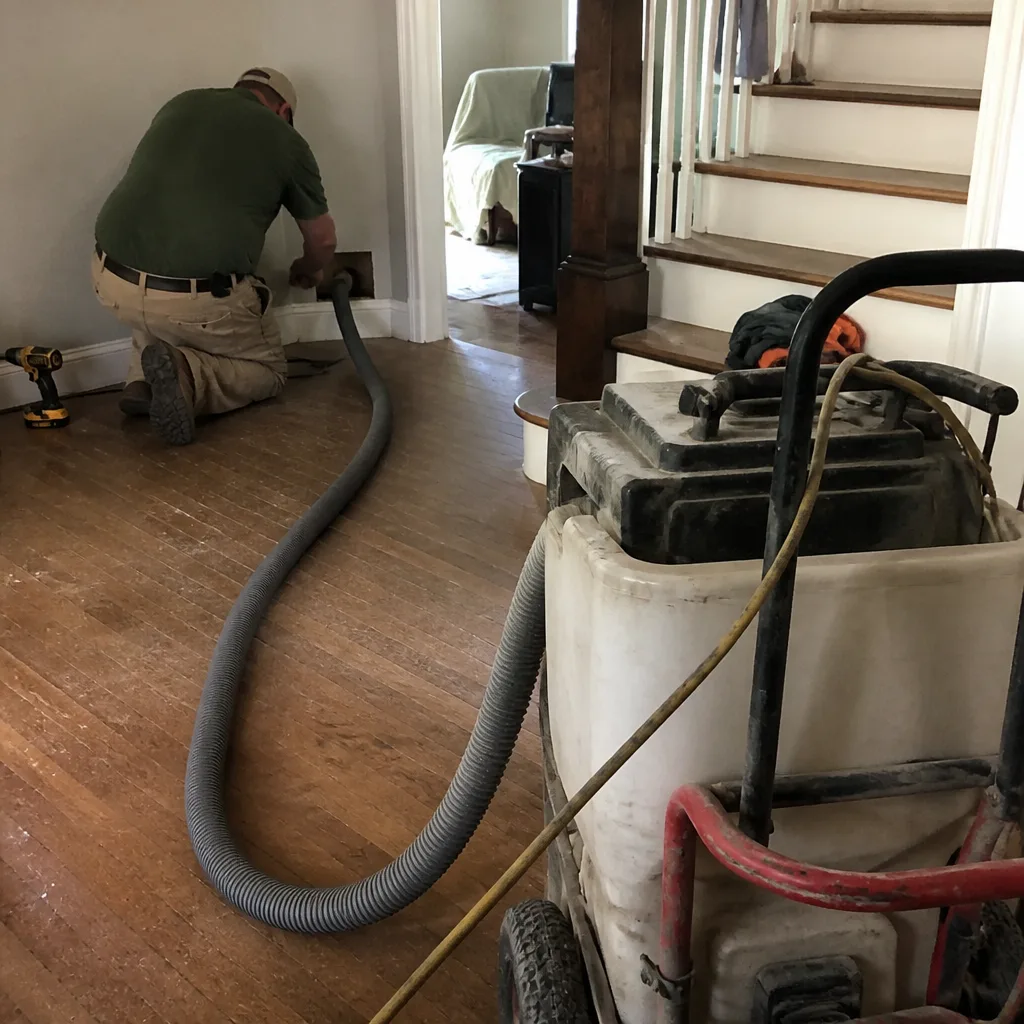 Before
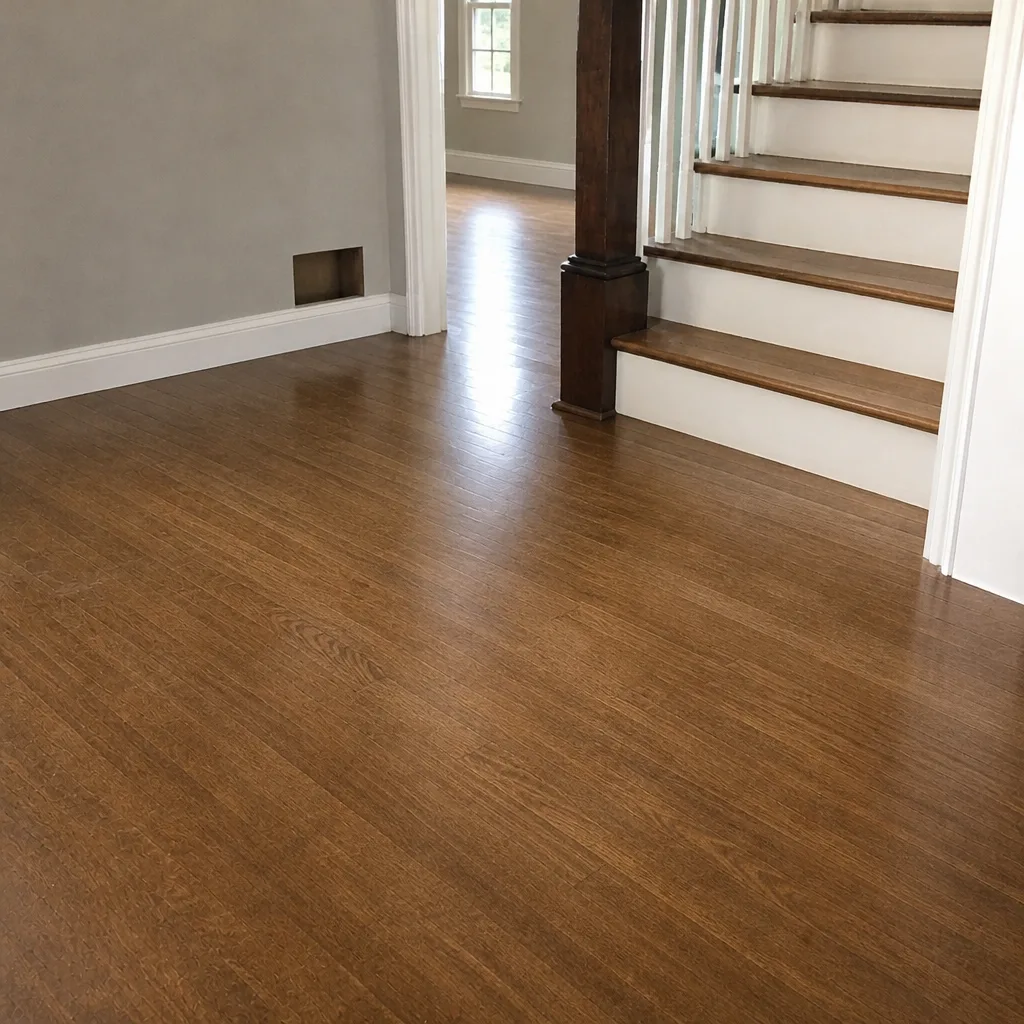 After
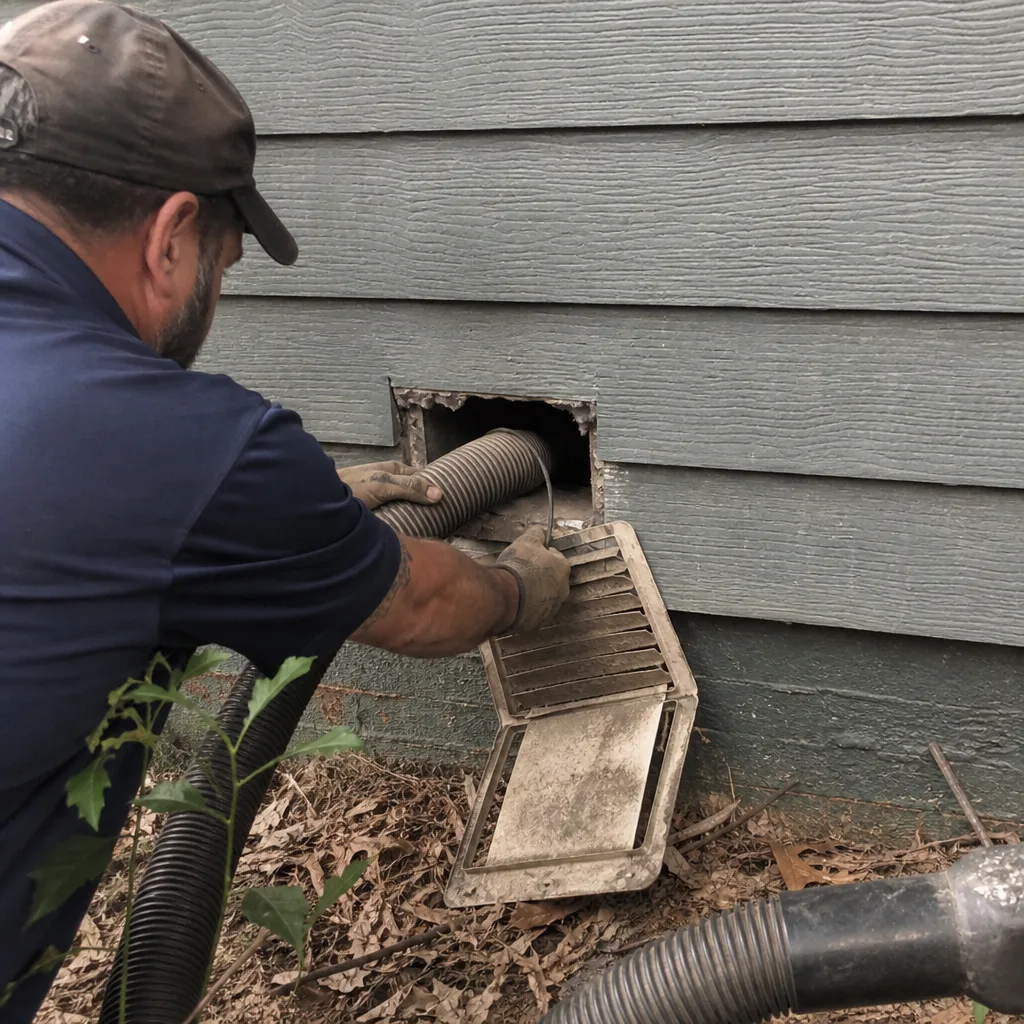 Before
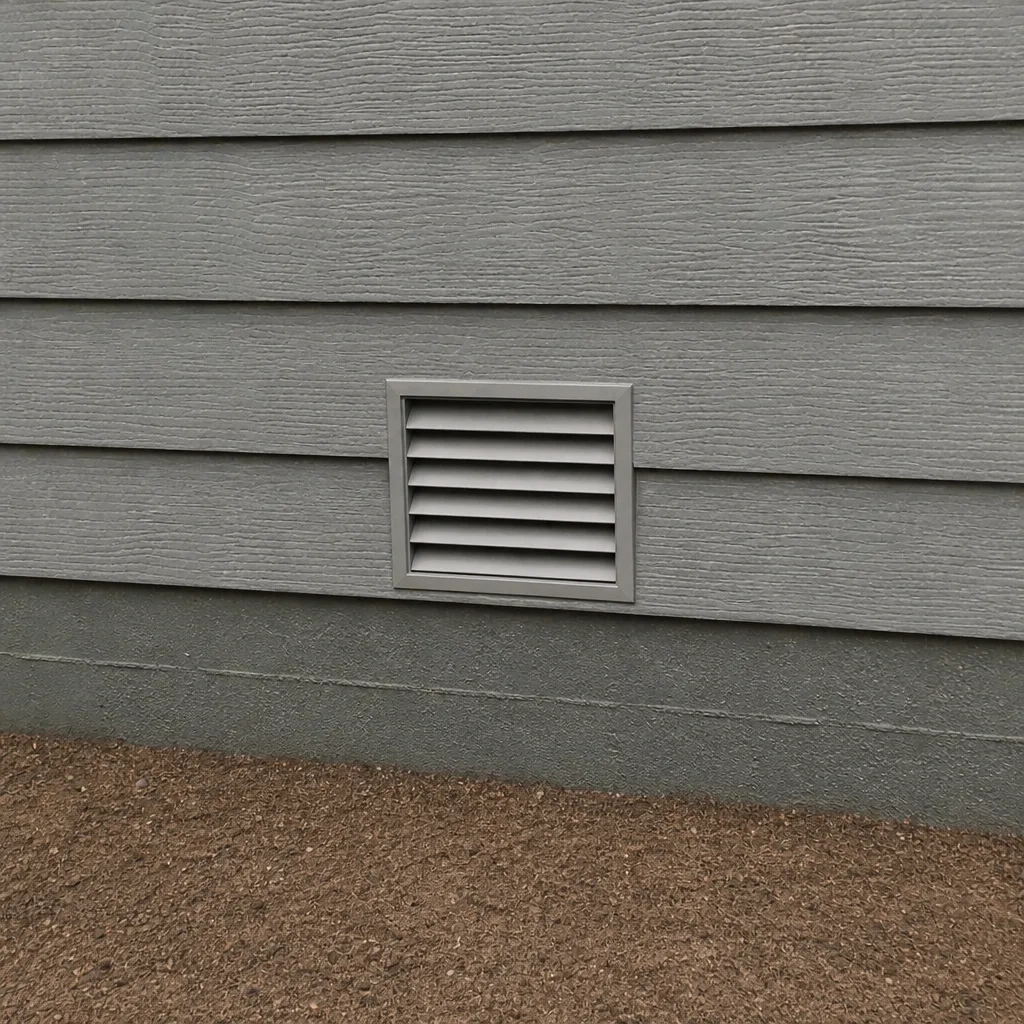 After
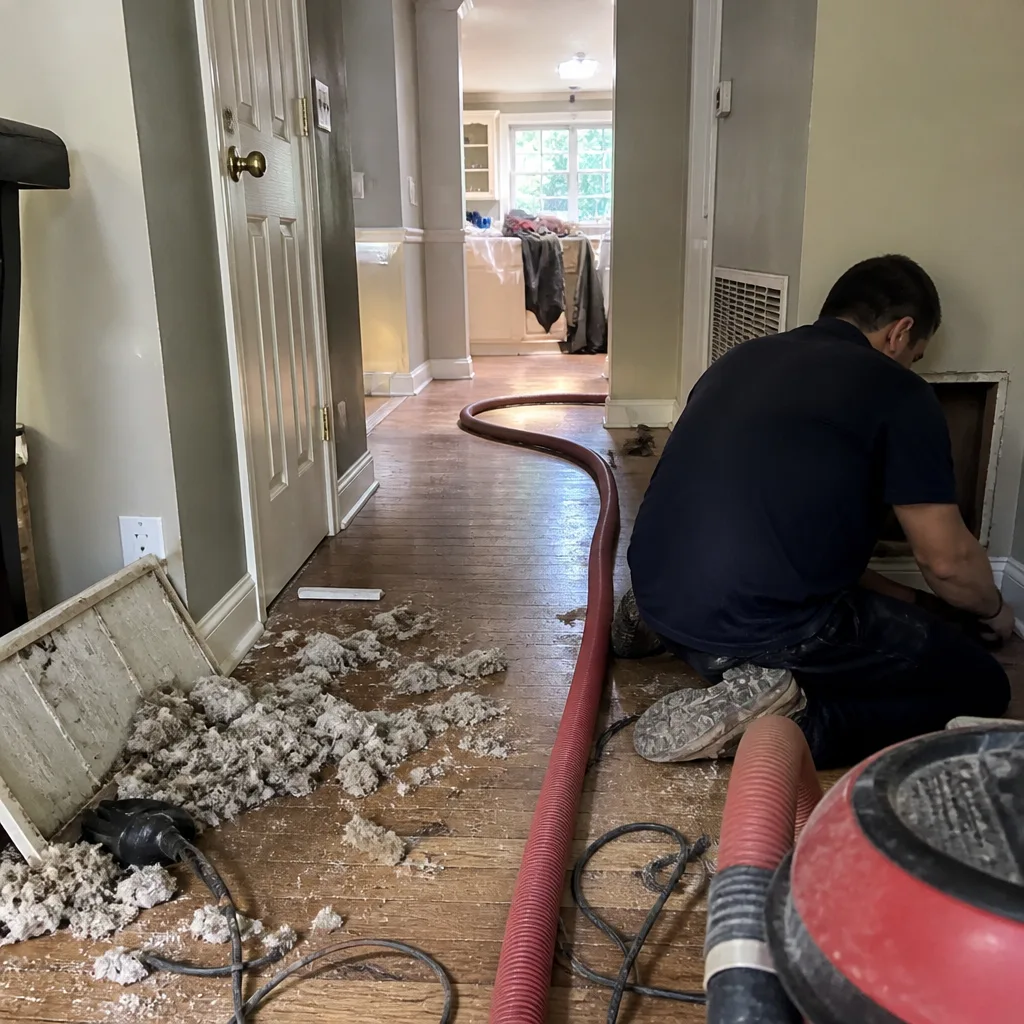 Before
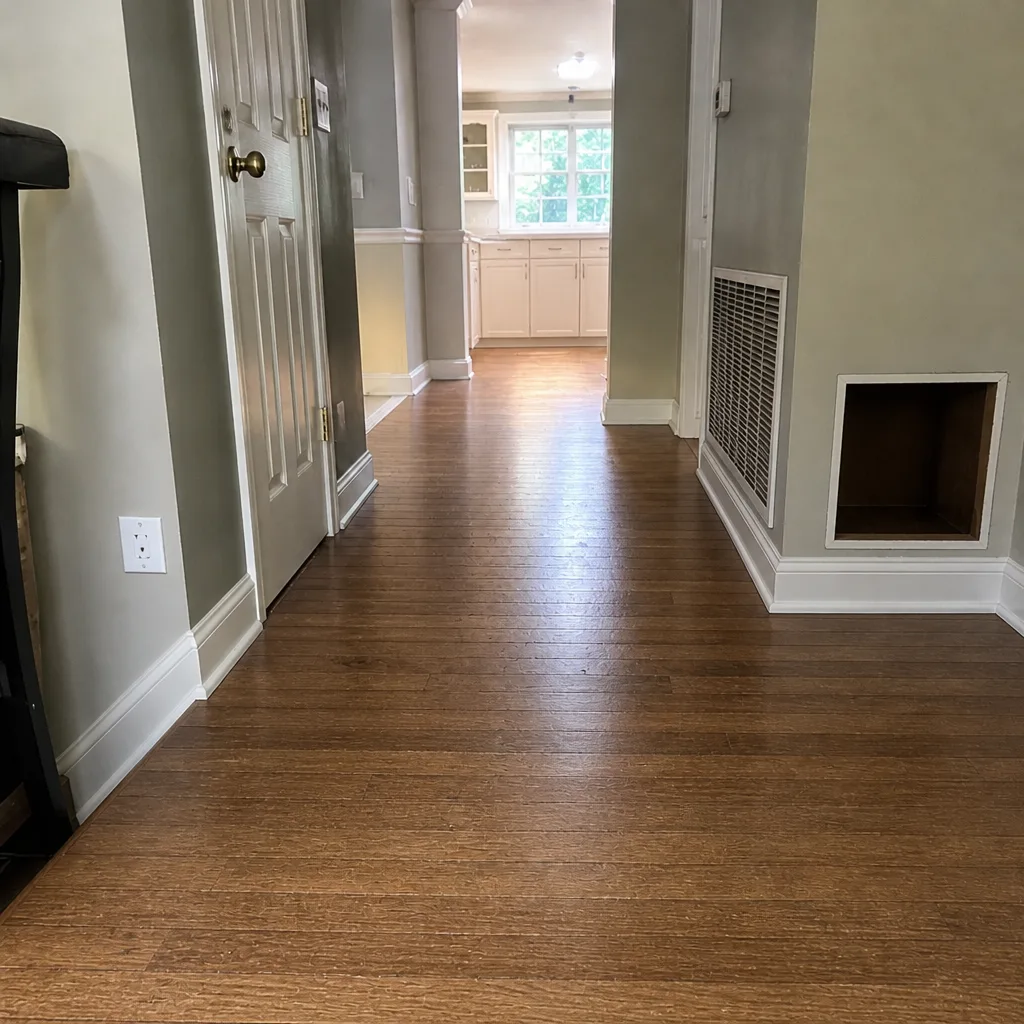 After
When to Call a Professional
Call a professional when any of these four situations applies: you’ve had a fire in the home, you’ve had a water event that reached the HVAC system, you’ve found or suspect rodent activity in the ducts, or you’ve found visible mold at a register or on ductwork surfaces. Also call if you smell a persistent musty or smoke odor coming from registers, or if a contractor has proposed cleaning without an inspection scope.
What separates a professional response from a fast response is the equipment and sequence. Negative-air containment, rotary brush agitation, HEPA extraction, EPA-registered sanitizing, and duct sealing should all appear in a written scope of work before anything starts. If any of those are missing, the job is not complete.
Our technicians have up to 10 years of experience working fires, floods, rodent events, and mold discoveries in this type of home. Air Duct Cleaning Hayes Barton offers free estimates in Hayes Barton. Call (833) 468-5692 and we’ll schedule an inspection and walk the duct system with you.
Frequently Asked Questions
Call the same day, and keep the HVAC off until you do. Soot inside the ducts continues to settle into the interior lining, and after the first few days the residue has bonded with surface moisture and becomes harder to remove. The earlier the inspection, the more cleaning options remain. Call (833) 468-5692 for a same-day inspection estimate.
It depends on the duct construction and how long it was wet. Rigid metal ducts that were wetted briefly can typically be cleaned, sanitized, and sealed. Flexible duct with internal insulation that saturated within the first 48 hours is usually a replacement item. Only an inspection can answer which applies to your system.
We don’t recommend it. Dried rodent droppings and nesting material aerosolize easily, and a shop vac stirs those particles back into the air without containing them. A proper job requires negative-air containment and HEPA extraction. Call (833) 468-5692 to schedule a contained job.
The price is set per job by a written estimate, and there is no premium added for the emergency timing. A post-fire job, a post-flood job, a rodent event, and a mold remediation are each scoped differently based on the extent of damage and what equipment is required. Call (833) 468-5692 for a free estimate – the written scope sets the final price.
A low quote usually means one of three things: no negative air containment, cleaning of saturated flex duct instead of replacement, or no post-remediation documentation. Each of those keeps the price low and the problem intact. Ask any contractor what equipment they will use and whether containment is in the scope.
Most policies cover duct cleaning when it’s tied to a covered peril like fire, a burst pipe, or wind-driven water intrusion. Rodent and long-term mold events are covered less predictably and depend on the policy. Documentation is what matters most. Photograph the scene before cleanup, get a written scope, and confirm the documentation package with your adjuster before work starts.
The Bottom Line
Emergency air duct work is not one problem with one solution. Fire, flood, rodents, and mold each require a different protocol, and getting the protocol right in the first week saves the homeowner a second cleaning, an emptied wallet, and months of recontamination. The common steps are simpler than they look: turn the HVAC off, photograph everything, call the insurer, and agree on a written scope that names the equipment before anyone starts. The Rotobrush rotary brush, Nikro negative-air extraction, and Abatement Technologies filtration aren’t branding points. They’re the difference between containing a health-relevant problem and spreading it through a home.
If you’re facing one of these four events right now, call us. Air Duct Cleaning Hayes Barton responds with a free written estimate so the scope and price are agreed before any work begins. Call (833) 468-5692. We answer 24/7. Fast dispatch from 7am to 7pm, Sunday through Friday.
Written by the team at Air Duct Cleaning Hayes Barton.