
Last updated November 23, 2026
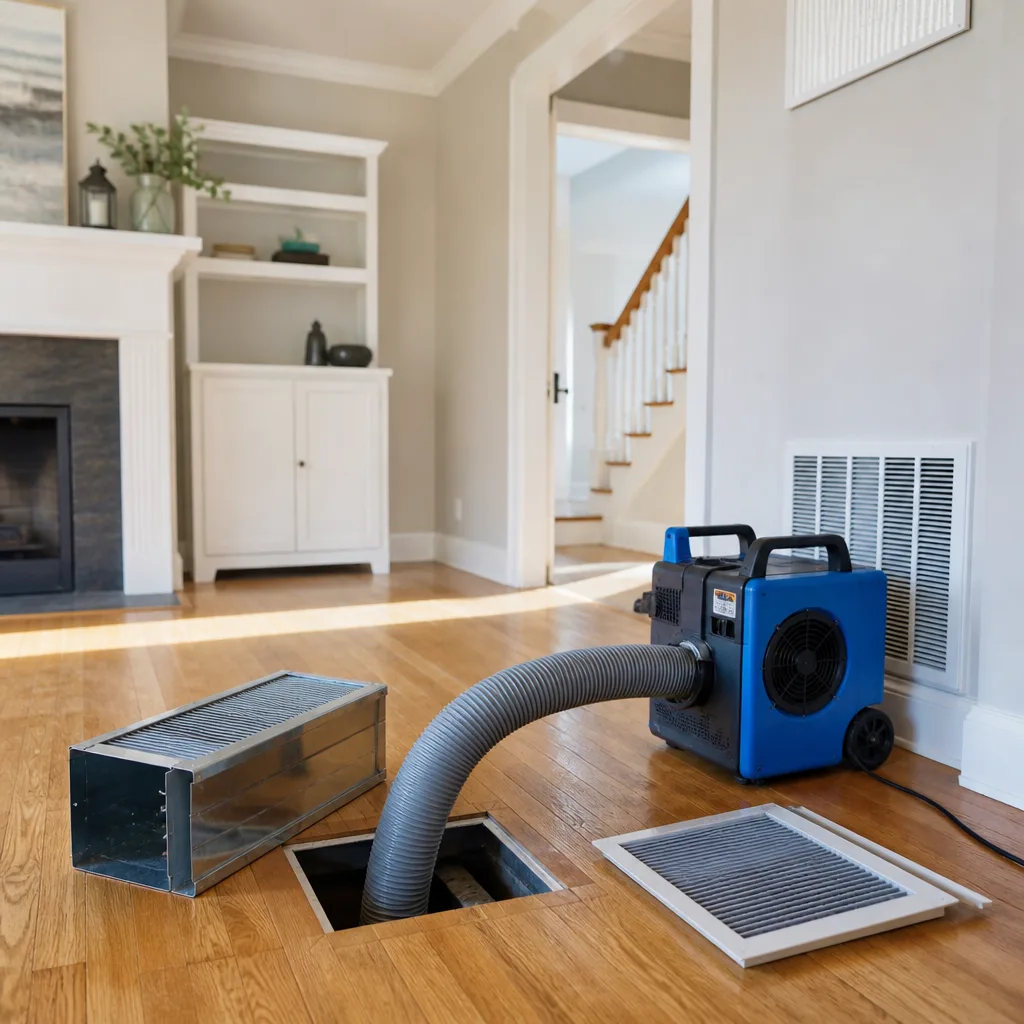 Whole-home duct cleaning
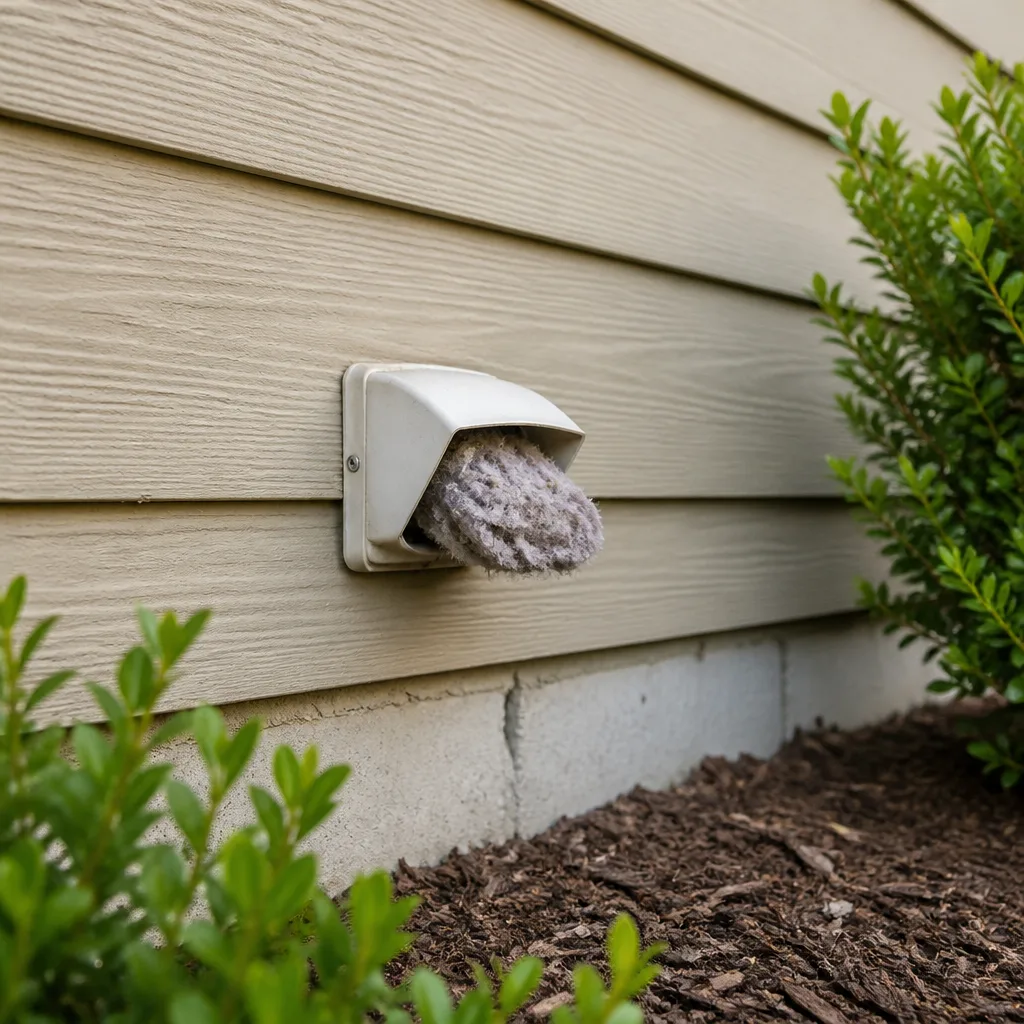 Dryer vent cleaning
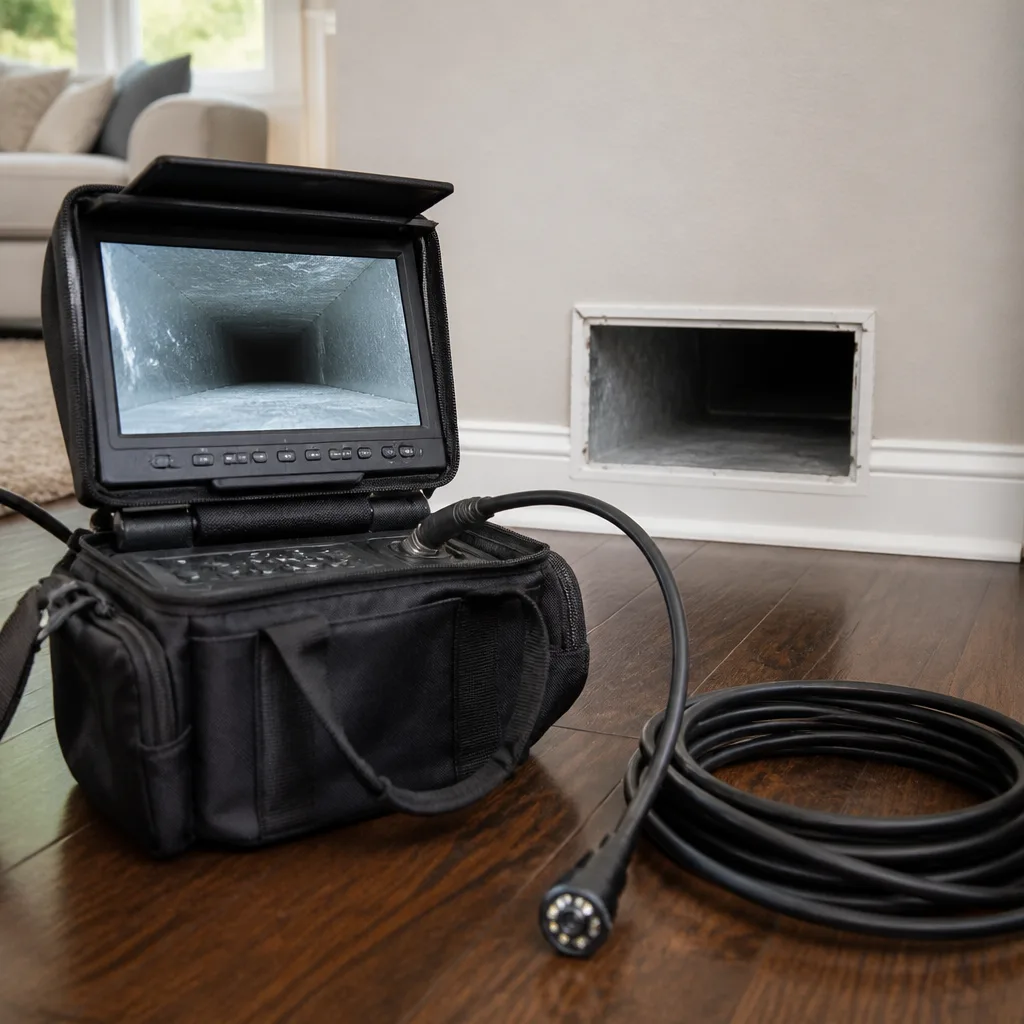 Camera inspection
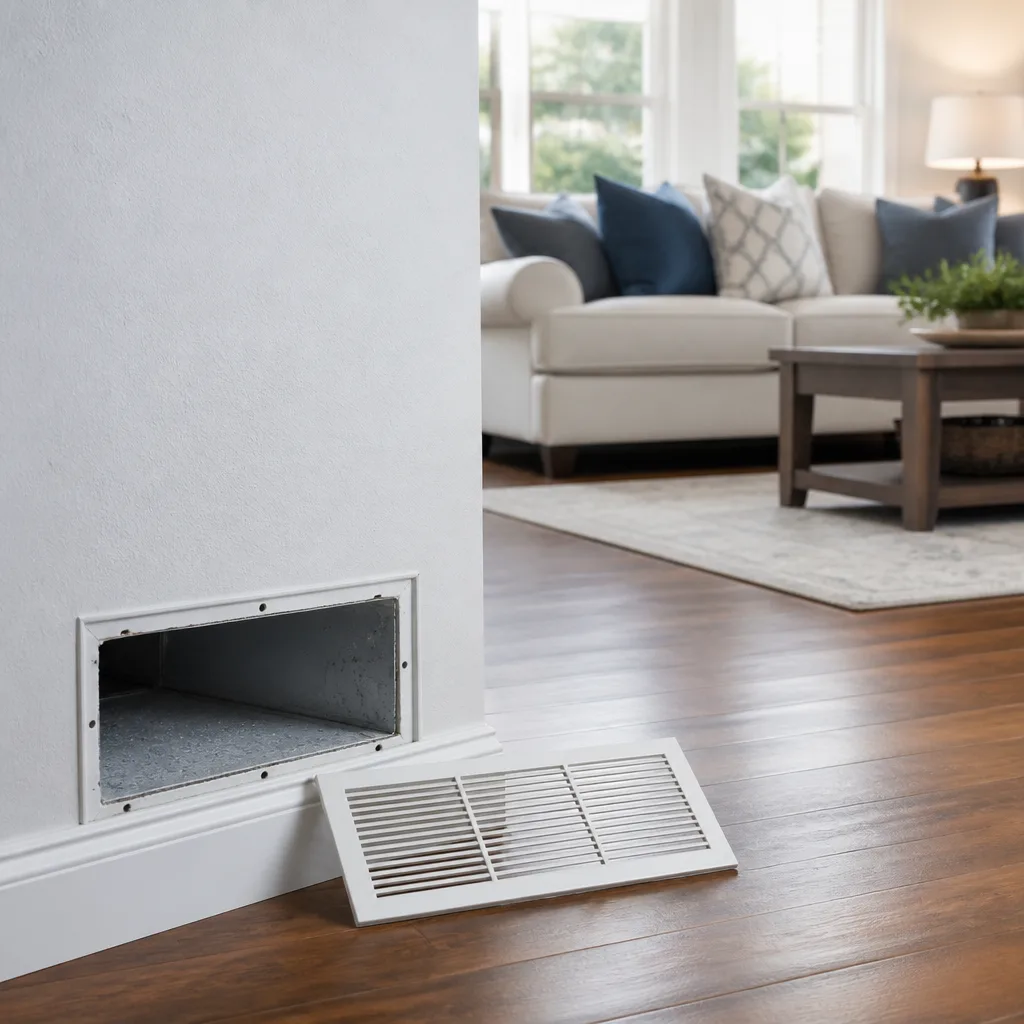 Sanitizing & deodorizing
Whole-system duct and dryer vent check with before-and-after photos - you see exactly what came out of your vents
That "$99 whole-house special" is a bait ad - the real number appears once they are in your hallway, or the "clean" is a shop-vac at the register. We photograph the inside of your ducts before and after instead.
Air Duct Cleaning Troubleshooting in Hayes Barton: Common Problems and How to Fix Them
If your vents were cleaned six months ago and the musty smell is back, the problem was never the ducts. It was something upstream that the cleaning crew missed, and no amount of brushing will reach it. We hear a version of that story often in Hayes Barton: a homeowner pays for a cleaning, the smell fades for a season, then returns with the first stretch of humid weather. What follows maps the symptoms you can actually observe to the three root causes behind almost every “dirty duct” complaint, so you can tell whether a cleaning will solve your problem or waste your money.
Quick Answer
Most air duct problems in Hayes Barton trace back to one of three root causes: contamination inside the ductwork itself, a source problem upstream (coil mold, a condensate pan overflow, or duct leakage), or a pressure and balance problem that cleaning cannot fix. Troubleshoot by matching your symptom to the cause before booking anyone, because a cleaning only resolves the first one. If the smell or dust returns within months of a cleaning, you’re almost certainly dealing with cause two or three.
Styles & brands we work with
- Whole-home duct cleaning
- Dryer vent cleaning
- Camera inspection
- Sanitizing & deodorizing
Table of Contents
- The Three Root Causes Behind Every Duct Complaint
- Duct Contamination vs. Source Problems
- Reading Airflow Asymmetry Between Rooms
- What Persistent Odor After Cleaning Actually Means
- When You Need a Pressure Drop Test or Duct Blaster
- Hayes Barton Factors: Slab Returns and Soil Gas
- How to Confirm the Work Was Actually Done
- Common Mistakes to Avoid
The Three Root Causes Behind Every Duct Complaint
Nearly every complaint we get about ducts falls into one of three buckets, and telling them apart is the whole game. Get the diagnosis wrong and you pay for a cleaning that doesn’t stick. Get it right and the fix is usually smaller and cheaper than you feared.
Here’s how the three causes break down:
- The ducts themselves are contaminated. Dust, debris, pet hair, and construction residue have accumulated on the interior surfaces. This is the one case where a proper source-removal cleaning genuinely solves the problem.
- A source upstream is feeding the problem. The evaporator coil has biological growth, the condensate pan is overflowing or stagnant, or a section of duct has come loose and is pulling dirty air from a crawlspace or wall cavity. Cleaning the ducts leaves the source untouched, so the contamination returns.
- The system has a pressure or balance problem. Leaky or undersized returns, crushed flex duct, or a mismatched blower pull air from the wrong places and starve some rooms. Cleaning changes nothing about airflow.
The reason this matters in Hayes Barton is that homes here vary a lot in age and construction. A 1950s ranch with slab-mounted returns and a newer build with sealed, insulated ductwork fail in completely different ways. We use a Rotobrush rotary brush system and Nikro negative-air extraction on the cleaning side, but before any of that equipment comes out we want to know which of these three we’re looking at. Cleaning is the answer to cause one and only cause one.
Duct Contamination vs. Source Problems
The single most common diagnostic mistake is treating a source problem as if it were duct contamination. Homeowners see dust blowing from a vent or smell something stale and assume the ducts are dirty. Sometimes they are. Often they’re just the messenger.
Here’s the practical distinction. Contamination lives on the interior of the ductwork and comes out with mechanical agitation and extraction. A source problem lives somewhere else in the system and keeps re-contaminating the ducts no matter how well they’re cleaned. The giveaway is timing: if the problem returns within weeks to a few months of a thorough cleaning, the cleaning was fine. Something upstream is feeding it.
Common source problems a cleaning alone won’t fix:
- Coil mold or biological growth. The evaporator coil sits wet for much of the cooling season. Growth there gets blown straight into the supply ducts.
- Condensate pan overflow or standing water. A pan that doesn’t drain properly keeps the air handler humid and breeds growth year-round.
- Duct leakage at joints and boots. Disconnected or poorly sealed sections pull air from crawlspaces, attics, and wall cavities, delivering the dust and odors of those spaces into your rooms.
- Return-side filtration gaps. A filter that doesn’t seat properly lets unfiltered air bypass it, so the coil and ducts load up faster than they should.
In Hayes Barton, the homes with whole-home filtration and humidification equipment are a good example of how a system works as a whole. If a Honeywell or Aprilaire filter housing isn’t seated correctly after a filter change, the bypass sends dirty air downstream, and the ducts look contaminated when the real failure is a two-minute filter seat. The fix is sealing and proper re-seating, not a repeat cleaning. Our full-scope indoor air quality service covers cleaning, sanitizing, repair, and sealing precisely because these problems cross over into each other. You can read more about how we approach the cleaning side on our air duct cleaning page.
Reading Airflow Asymmetry Between Rooms
You can locate a blockage or a collapsed flex duct section yourself, before any technician arrives, by paying attention to the difference in airflow between rooms. Uneven airflow is a diagnostic signal, not just an annoyance. If one room blows hard and the room next to it barely moves air, the problem is localized in the branch line that feeds the weak room.
Here’s a simple check anyone can do:
- Hold a tissue or a thin strip of paper against each supply register while the system runs.
- Note which registers move the strip strongly, which barely flutter it, and which don’t move it at all.
- Compare rooms that should be similar. A small bedroom with a big supply that barely blows signals a restriction in its branch.
- Check the accessible flex duct in the attic or basement if you can safely reach it without climbing or crawling into tight spaces.
The most common physical cause of a dead branch is crushed or kinked flex duct. In a hot attic, flex duct can sag, kink, or get stepped on during other work, and a crushed section strangles airflow to everything downstream. Another common culprit is a boot that’s come loose from the register, dumping conditioned air into the wall cavity or attic instead of the room.
In Hayes Barton’s older ranch-style homes, a weak far-end room is often the long branch that runs the greatest distance from the air handler. That run is both harder to push air through and more likely to have a kink or a sag. If the branch itself is intact, the problem may be balance rather than blockage, and that’s a pressure question rather than a cleaning question. It’s worth noting that a cleaning won’t fix a crushed duct, so if your tissue test points to one dead register, ask for that to be diagnosed first.
What Persistent Odor After Cleaning Actually Means
A persistent odor after a cleaning is telling you something specific, and the type of smell matters. Not all odors come from the same source, and each points to a different fix. Knowing which one you have narrows the diagnosis before anyone picks up a tool.
Microbial odor. Musty, earthy, damp-basement smell that gets worse when the system runs. This is biological growth, and it usually lives on the coil, the condensate pan, or damp duct lining rather than the duct interior alone. Cleaning and sanitizing with EPA-registered products addresses the growth on surfaces, but if the moisture source stays wet, the growth returns. The fix is finding and correcting the moisture source, not cleaning again.
Construction debris smell. A dry, dusty, faintly chemical smell in a home that’s had recent work done. Drywall dust, sawdust, and off-gassing from new materials settle in the system and get pushed through on every cycle. This one often clears after a proper source-removal cleaning, but only if the ducts are cleaned after the work is complete and before the system runs much.
HVAC burn-off smell. A metallic or slightly oily smell, most noticeable the first time the heat runs in the season. This is dust burning off the heat exchanger and the elements, and it’s normal for a short time. If it lingers or smells electrical, stop running the system and get it looked at; that’s a safety question, not a cleaning one.
When odor persists after cleaning, the answer is usually that a source was never found. If a cleaning crew cleaned the ducts and left the coil and pan alone, the microbial smell will come back within a season. That’s why our process works from the air handler outward, using Abatement Technologies air filtration to capture dislodged particles during the work, so the source gets addressed rather than just the ducts. You can see how we handle the air handler side on our HVAC cleaning page.
When You Need a Pressure Drop Test or Duct Blaster
Some problems can’t be confirmed by looking, listening, or holding a tissue to a vent. A pressure drop test across the air handler, or a duct blaster reading, is the only way to confirm whether a problem is actually solved. If you’ve had work done and want proof it worked, this is the measurement that proves it.
A pressure drop test measures how hard the blower is working to move air through the system. A higher-than-normal drop across the coil, filter, or ductwork tells you there’s a restriction somewhere in the path. It’s most useful when you’ve done work you believe should have fixed a problem and want to verify the result rather than trusting a hand-feel impression.
A duct blaster pressurizes the duct system and measures leakage. It tells you how much air is escaping before it reaches your rooms, and where the system is leaky. In Hayes Barton’s older homes, leakage at boots, joints, and slab connections is often substantial, and that leakage is exactly what pulls soil gas and crawlspace air into the ducts.
Both tests are worth asking about in these situations:
- Airflow still feels wrong after duct repair or cleaning.
- You want a baseline before and after a sealing project.
- A room stays persistently weak no matter what you’ve tried.
- Dust or odor keeps returning and you need to know whether duct leakage is the pathway.
Testing is a diagnostic step, not a cleaning step, and it’s the difference between guessing and knowing. If a crew cleans your ducts and tells you the problem is solved without any measurement, that’s a claim you have no way to check.
Hayes Barton Factors: Slab Returns and Soil Gas
Hayes Barton’s older ranch-style homes with slab-mounted returns are prone to a problem that mimics duct contamination so well that it fools a lot of people: soil gas infiltration. A return duct routed under a slab can develop a crack or a failed joint that pulls in air from the soil beneath the house. The result smells earthy, damp, or sour, and gets pushed into the living space. The ducts themselves may be spotless while the air coming through them is not.
The pattern is worth knowing because it changes the fix entirely. Cleaning a slab return won’t stop soil gas from entering a joint that’s still open. Sealing that joint does. Here’s how the Hayes Barton construction ties in:
- Slab-mounted returns run under or through the slab, so any crack or joint failure pulls from the soil rather than the living space.
- Older duct connections in this style of construction are more likely to have moved or separated with settling over the years.
- The smell fools people because it enters through the vents and reads as “dirty ducts” when the ducts are actually clean.
Because Hayes Barton homes can have this setup, we treat a persistent earthy or damp smell in these houses as a duct leakage and sealing question first, not a cleaning question. Sealing the failed joint is the fix, and it’s part of the full-scope loop we work through so you don’t need a second contractor to follow up. If your home also has whole-home filtration equipment from Honeywell or Aprilaire, we’ll check that the housing and seals are intact while we’re in the system, because a leaky filter housing produces the same symptoms.
How to Confirm the Work Was Actually Done
The honest way to confirm duct cleaning was actually done is before-and-after photos of your own ducts, taken by the technician during the job. You can’t see inside your ductwork from the living room, which is exactly why a vague “all cleaned up” is worthless as proof. Ask for photos and look at them.
The bait-and-switch reputation in this industry exists because a low teaser price can turn into a much larger invoice once the technician is on site, and because it’s hard to verify work you can’t see. The answer is straightforward: one flat price per system, agreed in writing before any work starts. Not a per-vent price that climbs with every register, and not a coupon price that changes once the equipment is unloaded. Before-and-after photos of your actual ducts, not stock images.
When you’re comparing quotes, ask these questions:
- Is this a flat price for the whole system, or a per-vent price? A per-vent price is the first red flag.
- Will I get before-and-after photos of my own ducts?
- What equipment are you using? Professional-grade rotary brush and negative-air extraction, or a shop vac?
- Are you cleaning the air handler and coil area, or only the ducts?
- Will you confirm with a pressure or leakage measurement if the problem was airflow?
The differences between quotes are usually differences in scope and equipment, not in how much work gets done. Our free estimate comes with the price set per system and written down before anything starts, and our satisfaction guarantee backs it. When you’re ready to compare, you can start from our main Air Duct Cleaning Hayes Barton page and ask directly.
Common Mistakes to Avoid
- Booking a cleaning to fix an airflow problem. If one room barely blows, the likely cause is a crushed duct or a balance issue, and a cleaning won’t touch either one. Diagnose the branch line first.
- Assuming a returning smell means the previous crew did a bad job. A smell that comes back within months usually means a source upstream was never addressed. The cleaning may have been fine; the diagnosis wasn’t complete.
- Choosing the quote with the lowest per-vent price. In Hayes Barton, the per-vent model is where bait-and-switch lives. Ask for a flat price per system and written scope before you decide.
- Skipping the air handler and coil. Cleaning ducts while leaving a wet coil and overflowing pan untouched guarantees the contamination returns. Insist on the whole system.
- Ignoring the dryer vent. Many crews treat dryer vent cleaning as an afterthought, but it’s a fire-safety service and belongs in the same visit. It’s a leading cause of residential fires, and it’s separate from your HVAC ducts.
- Treating a soil gas smell near slab returns as a duct dirt problem. In Hayes Barton’s older ranch homes, that smell often means a failed return joint pulling from soil. Sealing is the fix, not cleaning.
- Accepting a job with no photos or measurement. If you can’t see the before-and-after or get a pressure reading, you have no way to confirm the work was done.
When to Call a Professional
Call when a symptom doesn’t match a known cause or when you’ve confirmed one and want it fixed right. The scenarios that most warrant a professional visit: a persistent musty or earthy smell that returns after cleaning, a room with dead or weak airflow you can’t trace to an accessible kink, dust visible on surfaces right after the system runs, a recent renovation or HVAC replacement that left debris in the system, or a dryer that takes longer and longer to dry clothes. If you’re in a Hayes Barton home with slab-mounted returns and a sour smell, treat it as a sealing question and get it looked at before you pay for another cleaning. Air Duct Cleaning Hayes Barton offers free estimates in Hayes Barton. Call (833) 468-5692. We answer 24/7. Fast dispatch from 7am to 7pm, Sunday through Friday.
See the difference
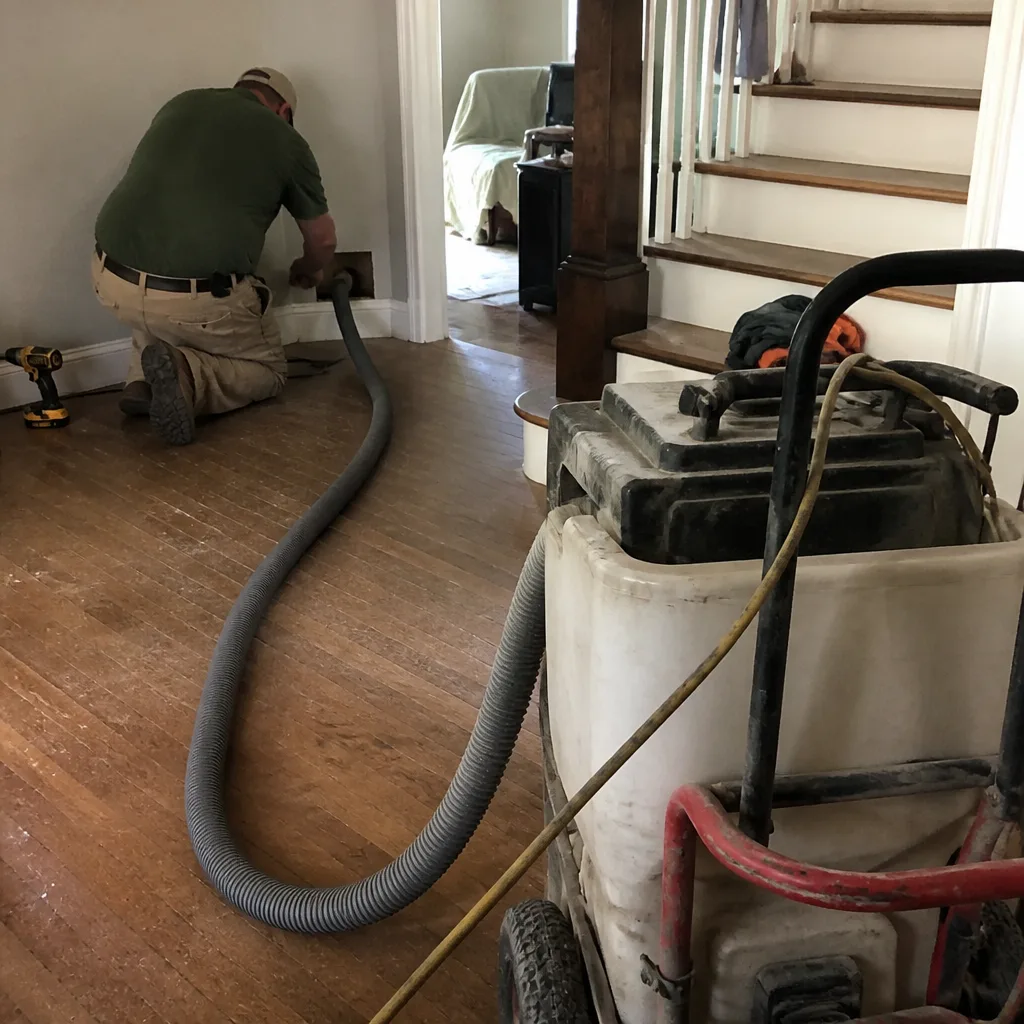 Before
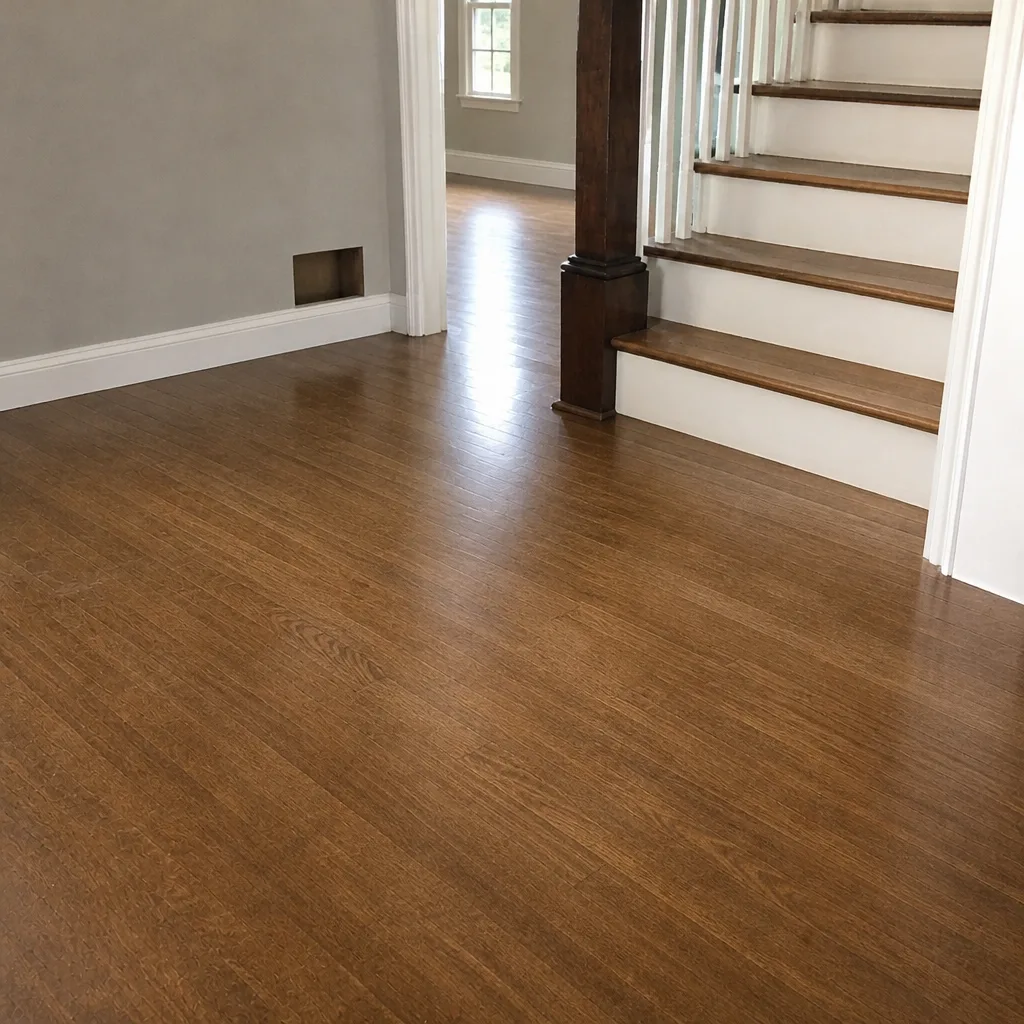 After
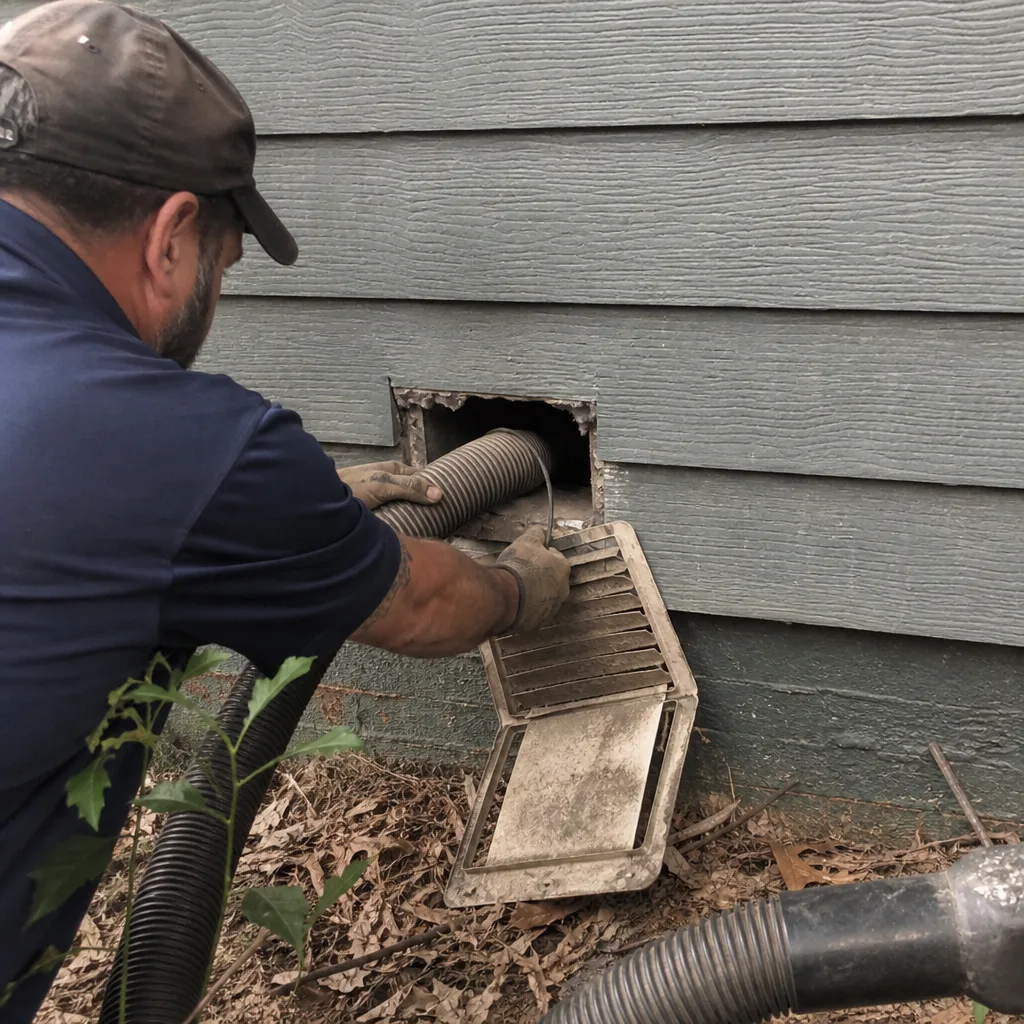 Before
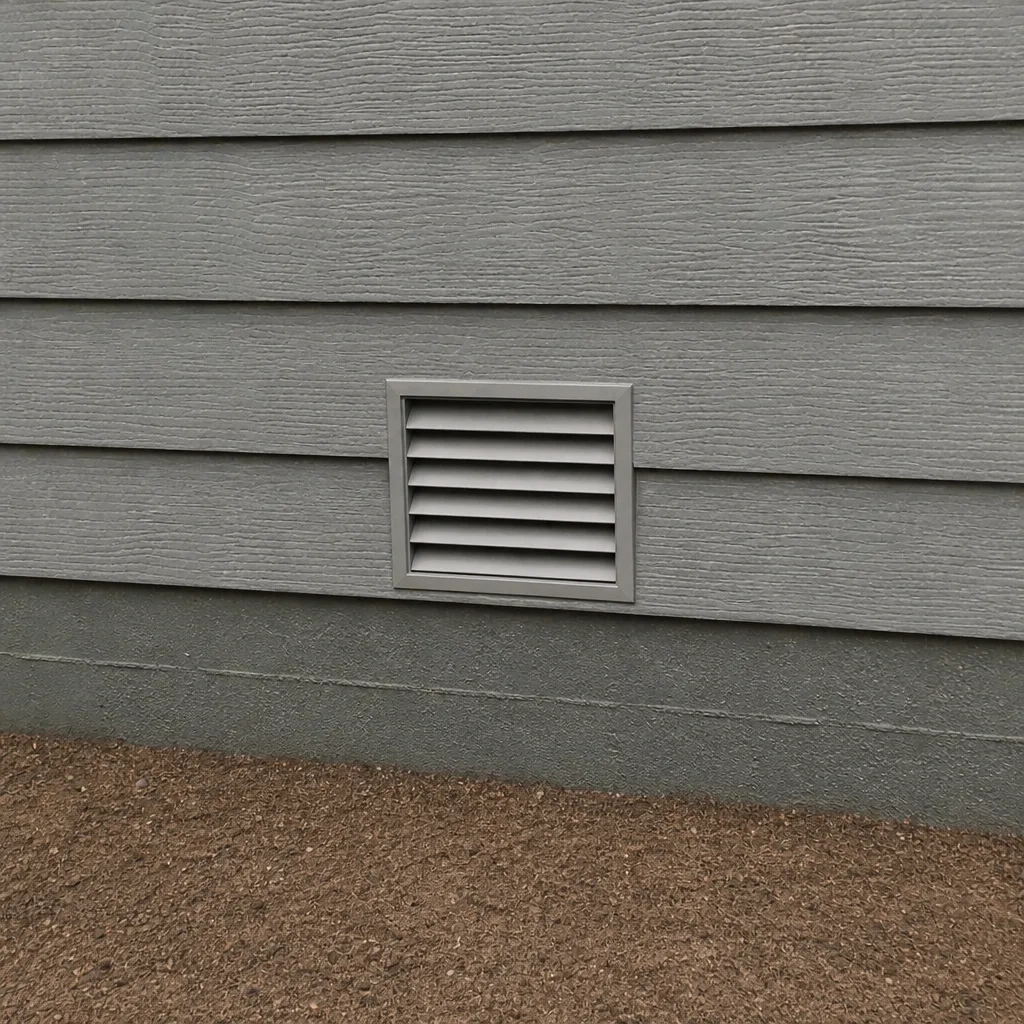 After
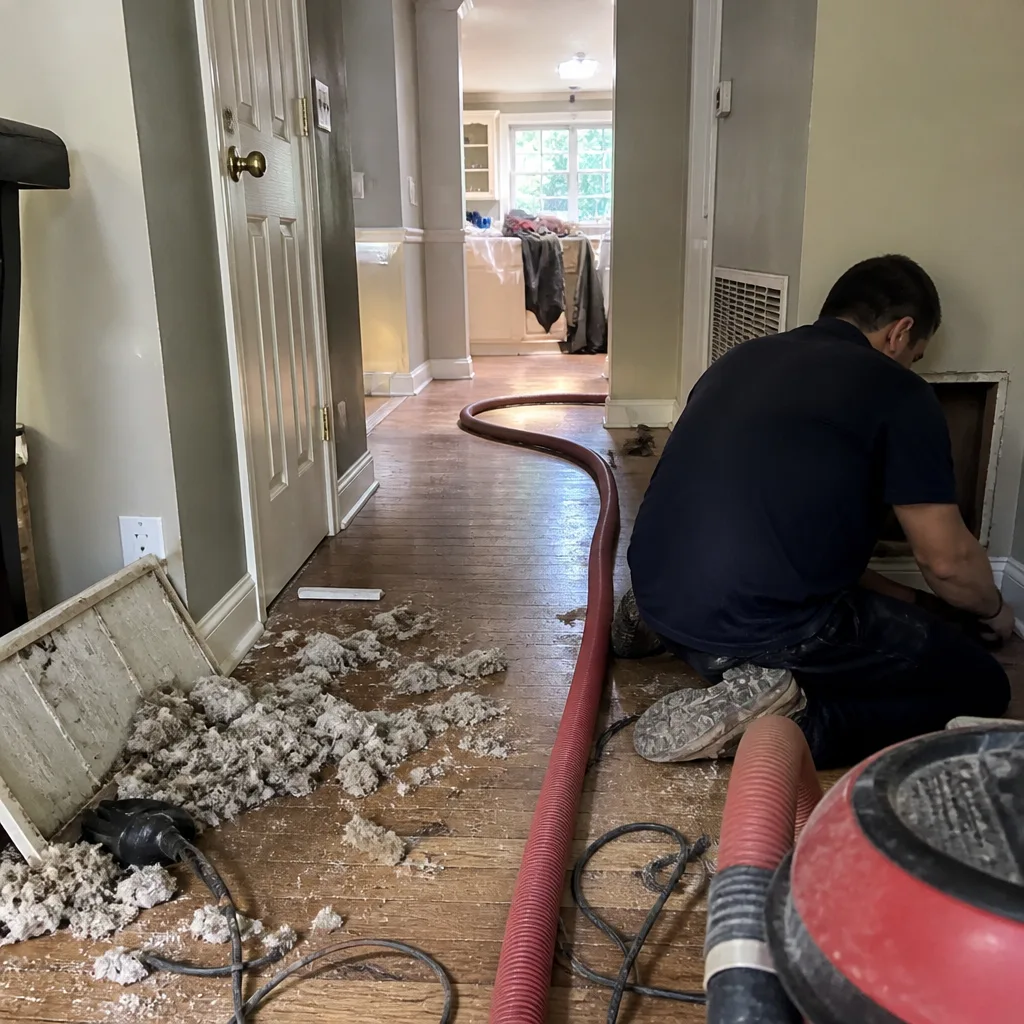 Before
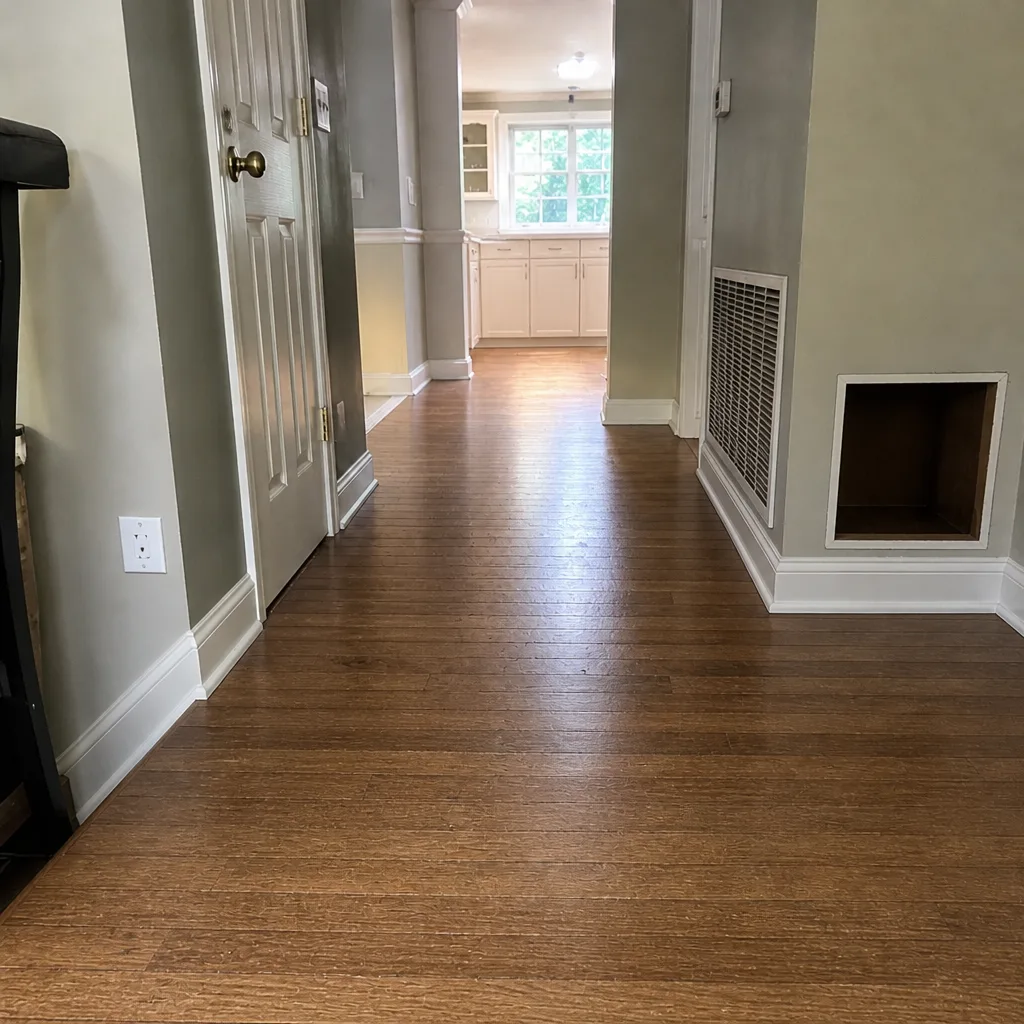 After
Frequently Asked Questions
Pricing depends on the size and layout of the system and how much contamination there is, so we set one flat price per system by written estimate rather than quoting a per-vent rate. That’s the number that protects you from a coupon price that grows once a technician is on site. Call (833) 468-5692 for an exact quote – estimates are free.
Low quotes usually come from per-vent pricing that climbs with every register, or from a scope that cleans the ducts but skips the air handler, coil, and sealing. In Hayes Barton, a cheap quote often reflects exactly that. Ask what the flat price covers before comparing, and call (833) 468-5692 to see how a whole-system estimate is built.
Before-and-after photos of your own ducts, taken during the job, are the proof. You can’t see inside your ductwork yourself, so the photos and a written scope are what let you verify it. We take photos on every job and stand behind a satisfaction guarantee; call (833) 468-5692 to schedule an estimate.
It depends on your home, not a fixed calendar. Pets, allergies, recent renovation, a move into a new house, or an HVAC replacement all justify a visit, while a home with clean surfaces and well-sealed ducts can go much longer. If a smell or dust returns soon after a cleaning, the issue is a source, not frequency. Call (833) 468-5692 to talk through your situation.
Usually not. Uneven airflow points to a crushed or blocked branch duct, a loose boot, or a balance problem, and cleaning doesn’t address any of those. Locate the weak branch first, then decide whether it needs repair, sealing, or adjustment. Call (833) 468-5692 and we’ll help diagnose it.
A smell that returns within a season is a sign that a source upstream, such as coil growth, a wet pan, or a leaky slab return, was never addressed. Cleaning removes contamination but doesn’t fix the thing feeding it, which is why we diagnose the cause before we clean. Call (833) 468-5692 for an estimate that addresses the source.
We Also Clean What Most Duct Crews Skip
Two parts of the system get left out of a lot of “duct cleaning” visits: the air handler and the dryer vent. Both matter. We clean and sanitize the air handler area and use Abatement Technologies filtration during the work so dislodged particles are captured rather than blown through the house. And we treat dryer vent cleaning as the fire-safety service it is, not an add-on. Our technicians have up to 10 years of experience, and the equipment under the hood is what separates a real source-removal clean from a quick pass. If your home has a Honeywell or Aprilaire whole-home air quality system, we work with that equipment too, so filtration and ductwork get treated as one system rather than two separate jobs.
The Bottom Line
If you take one thing from this guide, make it the diagnosis. Most duct complaints in Hayes Barton come down to contamination, a source upstream, or a pressure and balance problem, and only the first one is fixed by cleaning. Match your symptom before you book: a returning smell points to a source, a dead register points to a blocked or crushed branch, and an earthy smell near slab returns points to a leaky joint that needs sealing. Ask for a flat price per system, before-and-after photos of your own ducts, and a measurement if airflow was the issue. Get the cause right and the fix is usually smaller than you expected.
Call (833) 468-5692 for a free estimate. We answer 24/7. Fast dispatch from 7am to 7pm, Sunday through Friday.
Written by the team at Air Duct Cleaning Hayes Barton.